
📅 Game released: 2007
S.T.A.L.K.E.R.: Shadow of Chernobyl is a first-person survival shooter that sends the amnesiac Marked One into a dangerous, living Zone of radiation, anomalies, mutants, and rival stalkers. This PC guide compares official purchase and download options for the original game and Enhanced Edition, explains their differences for mods and saved games, and covers system requirements, Steam Deck status, and practical Windows setup.
 By Editor Zero — independently researched, edited, and maintained.
Last updated: 29 October 2026
Last reviewed: 29 October 2026
Table of Contents
- Quick Facts
- Official PC Stores, Download & Installation
- S.T.A.L.K.E.R.: Shadow of Chernobyl Review
- Pros & Cons
- PC System Requirements
- Frequently Asked Questions
- Similar Games
S.T.A.L.K.E.R.: Shadow of Chernobyl Quick Facts
Official PC Stores, Download & Installation
👇 Compare the official Windows PC purchase and download options below, including the classic original and Enhanced Edition, before choosing which version of S.T.A.L.K.E.R.: Shadow of Chernobyl to install or mod.
- Original PC version: The 2007 classic is available from GOG. Its original Steam page is unlisted from Steam search but has also displayed a direct purchase option; check the store page for your region.
- Enhanced Edition: The 2025 Shadow of Chornobyl – Enhanced Edition is officially offered through Steam, GOG, and Epic Games Store. It adds upgraded lighting, textures, models, water effects, improved weapon presentation, and quality-of-life refinements.
- Both versions included: GSC Game World confirms that eligible owners of the classic PC game receive its Enhanced counterpart, while purchasing the Enhanced Edition grants the classic version. Check your existing Steam, GOG, or applicable store library before purchasing again.
- GOG and offline installation: GOG offers DRM-free copies and optional GOG Galaxy installation. Its standalone installers let you install and play the purchased Windows releases without using the Galaxy client; GOG also documents Windows 10/11 compatibility work on the original game.
- Trilogy versus one game: S.T.A.L.K.E.R.: Legends of the Zone Trilogy collects Shadow of Chornobyl, Clear Sky, and Call of Prypiat in Enhanced form. Choose the single-game purchase if you only want Marked One’s adventure, and check your library for owned games before buying the collection.
- Mods and save files: The original is the safer starting point for longstanding Shadow of Chernobyl mods such as Zone Reclamation Project. Existing classic mods do not directly work in Enhanced Edition, and original saves cannot be transferred to Enhanced; keep separate installations and backups.
- Keyboard and controller: The classic PC release was designed primarily around keyboard and mouse. Enhanced Edition adds full controller support, making it more convenient for gamepad and handheld play without external input-mapping workarounds.
- Steam Deck: Valve lists the original Steam version as Unsupported, whereas Enhanced Edition is Verified. The different ratings apply to different Steam applications, not to a single interchangeable installation.
- Multiplayer distinction: The original includes online and LAN PvP features in its Steam listing, while Enhanced Edition is presented as single-player. Do not assume the original’s old online matchmaking services or active public servers are guaranteed; this guide does not verify their availability.
- Separate game installs: Select the original or Enhanced Edition as its own library entry, install it through the relevant official store or owned offline installer, and start a new save for that version. Verify the chosen edition before adding mods or copying configuration files.
 Buy S.T.A.L.K.E.R.: Shadow of Chornobyl Enhanced Edition on Steam
 Buy S.T.A.L.K.E.R.: Shadow of Chernobyl on GOG
 Buy S.T.A.L.K.E.R.: Shadow of Chornobyl Enhanced Edition on Epic Games Store
 Visit the Official S.T.A.L.K.E.R. Trilogy Website

S.T.A.L.K.E.R.: Shadow of Chernobyl Review
The Zone makes survival thrilling precisely because it refuses to behave.
A road can be quiet on the way north and dangerous on the way back. A gunfight may begin before the Marked One reaches his objective, and the best reward from surviving it might be a handful of ammunition rather than progress on a quest. S.T.A.L.K.E.R.: Shadow of Chernobyl makes those interruptions the substance of its first-person survival shooter. GSC Game World’s fictional exclusion zone blends scavenging, hostile factions, radiation, mutants, and environmental anomalies into places that rarely feel entirely under the player’s control.
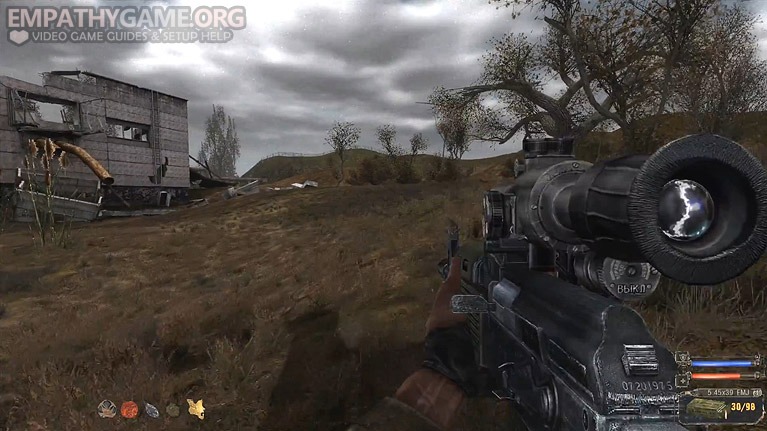
Its great strength is not that every encounter is perfectly designed. Quite the opposite: the AI can behave strangely, the early gunplay feels unreliable, and the quests sometimes struggle to keep up with the simulation surrounding them. Yet the mixture gives ordinary travel a tension that more tightly scripted shooters seldom sustain. Players who like methodical exploration, imperfect information, and adapting to an unfriendly world have much to discover here. Those who need immediate precision, convenient navigation, or a smoothly told cinematic story will feel the rough edges quickly.
Every Journey Has a Life Beyond the Mission
The Marked One begins in the Cordon with little more than basic gear and a lead from trader Sidorovich. Progress means accepting work, collecting information, searching abandoned buildings and bodies, and gradually gaining the supplies to push farther into the Zone. The Cordon, Garbage, Agroprom, Rostok, and later northern areas are substantial separate regions joined by loading transitions, rather than a single seamless landscape. Their roads, checkpoints, tunnels, and industrial compounds make route knowledge increasingly valuable. Backtracking can be tiresome, especially without conventional fast travel, but it also means the distance between a safe camp and a hostile laboratory feels consequential.
The A-Life system is the major reason those journeys resist routine. Stalkers and mutants can move and fight independently of the immediate mission. In the Garbage, an encounter with bandits may already be unfolding when the Marked One arrives; intervening, waiting it out, or skirting the fighting can each be sensible. A route that felt secure earlier can be occupied by a different group later. It is not a flawless simulation, and individual events do not always communicate themselves clearly. An unrelated firefight or radio message can seem like a new objective, while a vulnerable side-quest contact can die before a reward is collected. That freedom can make the Zone convincing and the mission log frustrating in the same afternoon.
There is an important distinction between unpredictability and randomness. Familiar landmarks gradually let players estimate where soldiers patrol, where dogs gather, and which detours are worth the risk. Knowledge makes the world more manageable without making it completely obedient. The best stories arise when a plan is interrupted and the player has enough information to improvise rather than merely reload.
Gunfights Reward Composure, Even When the Weapons Resist It
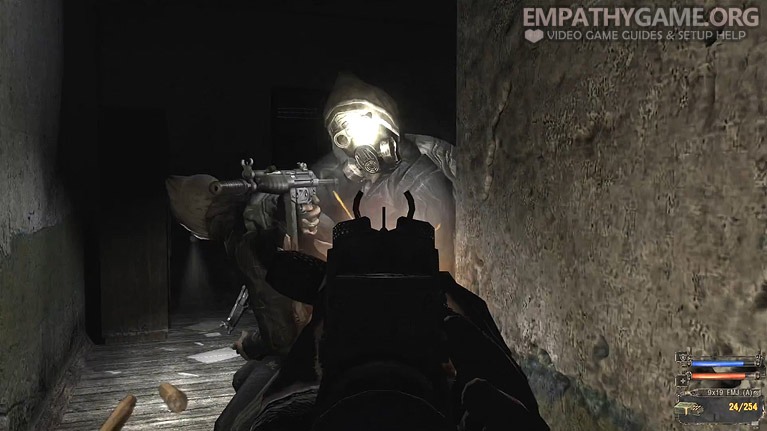
Early combat can be difficult to trust. Worn pistols and inexpensive rifles scatter shots, opponents can survive hits that seem well placed, and charging across open ground is usually a quick way to lose medical supplies. Crouching, watching an enemy’s position, and firing from cover are more effective than treating every encounter like a conventional run-and-gun shooter. A short exchange around a roadside barricade can last longer than expected because moving to a better angle matters more than simply unloading another magazine.
Firing technique makes a surprisingly large difference. Carefully spaced single shots, especially aimed at the head, can be more worthwhile than holding down automatic fire. Alongside the obvious recoil advantage, the classic game’s unusual opening-shot behavior appears to reward deliberate fire in some encounters. It is not a guaranteed damage bonus for every weapon or situation, and it does not turn an inaccurate starter gun into a precision rifle. Still, a fight that initially feels arbitrary becomes more controllable when every shot is followed by a chance to reassess the target’s position.
Human enemies can flank, seek cover, and pressure an exposed position, especially in outdoor spaces with several approaches. Inside buildings, the illusion weakens: opponents sometimes queue at doorways or fail to respond convincingly to a nearby threat. Mutants create a different kind of tactical problem. Dogs and boars threaten a traveler at short range, while a bloodsucker can turn an underground passage into a nerve-racking search for movement. Shotguns are effective against many of these close-range enemies, but carrying one as the active long gun means giving up immediate access to a scoped rifle until weapons are swapped. Since hostile humans are common and some mutants can be avoided, the most specialized tool is not always the most practical one for an extended journey.
Anomalies Make the Landscape Dangerous Before Anyone Shoots
The Zone is not simply a shooting gallery populated by unusual creatures. A nearly invisible patch of heat or distorted air can be more dangerous than a visible patrol. Tossing metal bolts ahead helps reveal certain anomalies, and the small act of checking a route changes the pace of exploration. It encourages attention to sound, movement, and the shape of the ground. Reaching an abandoned vehicle or wrecked building might require a careful approach even when no enemy can be seen.
Artifacts often make that risk tempting. Found around hazardous areas or recovered elsewhere in the Zone, they can be sold for money or equipped to change protection, endurance, or other survivability traits, often introducing a drawback in exchange. An endurance boost is especially attractive in a game where so much time is spent walking, but a different artifact may be worth carrying before entering radioactive ground. This is a flexible system rather than a formal character build, and it turns an interesting find into a choice between profit, protection, and mobility.
The artifact system also contains mechanical oddities the game barely explains. In the original game, stacking enough resistance artifacts can produce an obscure anomaly interaction that restores damaged armor instead of harming it. That is more an exploit-like consequence of how protection values combine than an intended, convenient repair service. The larger lesson is that the Zone rewards curiosity, while sometimes leaving players to distinguish clever systems from poorly communicated quirks. Once an anomaly field’s safe path is memorized, some of that initial mystery inevitably fades.
The Strongest Storytelling Happens Outside Conversations
The main plot begins with an amnesiac survivor of a wrecked death truck, a PDA instruction to kill a man named Strelok, and almost no explanation of why. Traders, scientists, and other stalkers gradually provide leads, but the story rarely stops the action for polished exposition. Duty and Freedom offer opposing ideas about what the Zone represents, while the growing scientific mystery suggests forces more disturbing than ordinary contamination. The premise is strong because it makes investigation feel dangerous. Its execution is less dependable: dialogue can be blunt, important context is buried in PDA entries, and supporting characters often serve a practical purpose without developing much personality.
The locations do more expressive work. A campfire, a guitar, and a few stalkers resting after dark make a settlement feel temporarily human; stepping back into a field of abandoned machinery immediately removes that comfort. The 100 Rads bar provides a brief sense of routine, while the Agroprom underground and laboratories such as X18 replace familiar outdoor distances with narrow passages and threatening sounds. The game’s industrial textures and stiff character animation have aged, but concrete corridors, rusting structures, and empty rooms retain an unusually persuasive physical presence.
Sound is particularly important to the fear. A distant burst of gunfire suggests an event that might be worth avoiding or investigating. The Geiger counter warns about radiation without explaining where safety lies, and the noises of unseen creatures encourage hesitation before turning a corner. Weather and changing daylight can make an otherwise familiar journey feel exposed. The horror works best through uncertainty rather than constant scripted shocks; a creature is frightening partly because the player has already learned that an empty room is not the same thing as a safe room.
Better Equipment Does Not Always Mean a Better Journey
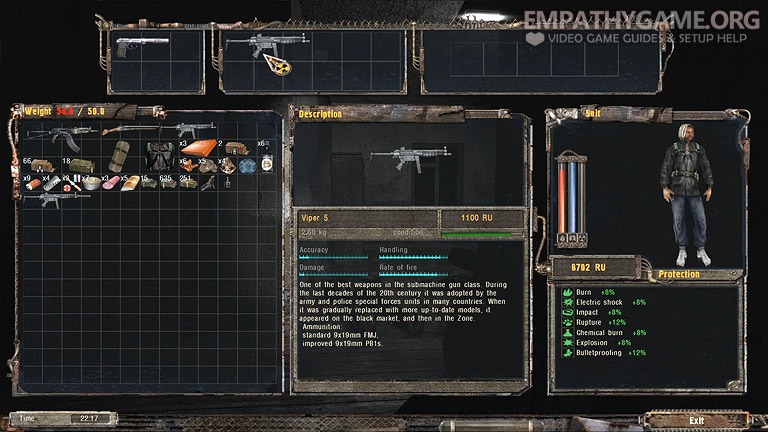
There are no experience levels or skill trees to rescue a careless player. Advancement comes from finding dependable rifles, ammunition, protective suits, useful artifacts, and enough confidence to explore beyond familiar territory. A cleaner rifle with optics can transform a long outdoor engagement, but a powerful late-game weapon is not automatically an upgrade. If its ammunition is rare or its aiming behavior unfamiliar, a well-supplied rifle the player knows intimately may be the more reliable choice. The ammunition economy gives familiarity a value that equipment statistics alone cannot convey.
Armor brings equally meaningful compromises. Better suits can protect against bullets, radiation, or other hazards, but no outfit solves every problem. The heavy exoskeleton, for instance, offers substantial protection and carrying capacity while preventing sprinting in the original game. On a short defensive stand that can seem worthwhile; over a long trek, or during a section that demands rapid movement, its penalty becomes hard to ignore. It is an unusually sharp trade-off, made harsher by an interface that does not always explain why a movement option has disappeared.
Carrying weight and durability further complicate the usual impulse to loot everything. Picking up a second rifle may mean leaving bandages or ammunition behind, and damaged gear cannot simply be restored through an ordinary repair counter. Choosing when to travel light, when to stockpile supplies, and when to walk away from tempting loot is part of mastering the Zone. The inventory management is often cumbersome, but removing it would also remove much of the pressure that gives each expedition its meaning.
Side Jobs Are Uneven, but Not Entirely Disposable
Many optional jobs are repeatable assassinations, deliveries, or mutant-clearing assignments, and accepting every available task quickly makes the campaign feel like a courier route. Their rewards do not always justify repeated journeys through already familiar areas. Yet treating all side content as filler misses the more interesting exceptions. Some one-off requests lead toward unusual equipment or valuable artifacts, and the Arena near the Bar turns combat into self-contained bouts with monetary rewards. These activities matter most when they offer a reason to prepare differently, not merely another marker to clear.
The freedom to decline errands is therefore as important as the freedom to accept them. Following a meaningful lead, investigating a stash, or taking a detour into dangerous territory can be more satisfying than clearing an entire PDA checklist. Unfortunately, awkward quest scripting sometimes blurs this distinction: tasks may repeat too readily, and independent fighting can interfere with a return visit. The simulation gives side missions a life beyond the player, but the mission design is not always flexible enough to absorb its consequences.
The Finale Trades Discovery for Urgency
As the Marked One advances toward the center of the Zone, the campaign grows more directed. The changing surroundings and increasingly dangerous opponents help establish a sense of escalation, but the balance between exploration and combat begins to shift. One late approach toward the power plant involves hostile soldiers, helicopter pressure, and a need to move rapidly through exposed terrain. It can be tense, yet it also asks the player to abandon habits that earlier hours encouraged: pause, scout, look for an alternative route, and conserve resources. The difficulty is not simply greater; the kind of decision-making has changed.
That makes the final stretch divisive. Players who enjoy the tighter action may welcome a decisive culmination, while those most attached to the loose scavenging rhythm may find the shift frustrating. The story’s multiple endings, including a deeper investigative route that requires attention to earlier clues, give the campaign a reason to revisit. They also reveal another weakness of its presentation: missing an important thread can leave the larger mystery feeling much thinner than it actually is.
Replay Value Comes Mainly from Different Decisions
A second journey is less about changing character classes than about knowing which roads to risk, which factions to antagonize, which jobs to ignore, and what equipment to carry. Familiarity takes some fear out of the unknown, but it creates room for bolder routes and more deliberate choices. The absence of a free-roaming post-story continuation in the original campaign means unfinished business is best handled before the end. Classic PC mods can change the balance and structure considerably, although the unmodified adventure has a specific rhythm worth understanding on its own.
The original also includes competitive Deathmatch, Team Deathmatch, and Artifact Hunt. They retain some of the weapon handling but reduce the scavenging, atmosphere, and unpredictable journeying that make the campaign distinctive. Multiplayer is an additional mode rather than a substitute for the experience at the heart of the game.
Final Verdict
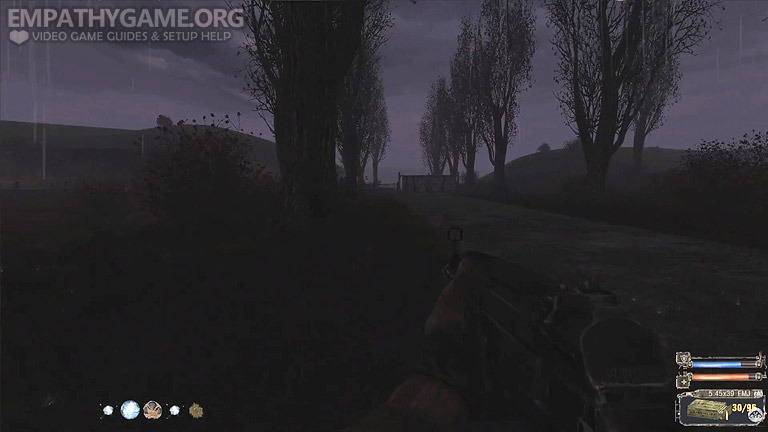
S.T.A.L.K.E.R.: Shadow of Chernobyl remains compelling because surviving the Zone requires more than winning fights. A sensible route can become unsafe, useful equipment can carry a hidden disadvantage, and a valuable artifact can force a choice between greater protection and an uncertain trip home. Its memorable moments often happen between formal objectives, where the game’s simulation, resource limits, and atmosphere work together without promising a tidy outcome.
That freedom has costs. Early combat can feel needlessly inconsistent, quest logic occasionally fails to keep pace with wandering characters, inventory management slows travel, and the final hours lean harder on action than on the exploratory tension that makes the opening special. The fragmented storytelling also demands more patience than some of its revelations should require. Players looking for smooth gunplay, clean quest direction, or a cinematic narrative may understandably prefer a more controlled shooter.
For those willing to study the landscape, accept occasional frustration, and find satisfaction in making their own small survival plans, the trade-off is worthwhile. The original Zone feels neither welcoming nor reliably fair, but it is unusually good at making preparation matter and making relief feel earned. Its lasting achievement is not a flawless open world; it is a world that makes the player pay attention.
S.T.A.L.K.E.R.: Shadow of Chernobyl Pros & Cons
S.T.A.L.K.E.R.: Shadow of Chernobyl PC System Requirements
The following are the original Windows PC game’s published minimum and recommended requirements, not specifications for the separate Enhanced Edition. They are historical launch-era targets rather than guarantees of compatibility with every modern driver or Windows installation.
ORIGINAL GAME — MINIMUM:
OS: Windows XP SP2 / Windows 2000 SP4
CPU: Intel Pentium 4 2.0 GHz / AMD Athlon XP 2200+
RAM: 512 MB
GPU: NVIDIA GeForce FX 5700 / ATI Radeon 9600, or a DirectX 8-compatible graphics card with 128 MB VRAM
Storage: 6 GB available space
Sound: DirectX 9-compatible sound card
ORIGINAL GAME — RECOMMENDED:
OS: Windows XP / Windows Vista SP1
CPU: Intel Core 2 Duo E6400 / AMD Athlon 64 X2 4200+
RAM: 2 GB
GPU: NVIDIA GeForce 8800 GT / ATI Radeon HD 2900 XT, or a DirectX 9.0c-compatible card with at least 256 MB VRAM
Storage: 10 GB available space
Sound: DirectX 9-compatible sound card
Enhanced Edition PC Requirements — Separate 2025 Release
Do not apply the original game’s lightweight hardware requirements to Enhanced Edition. The newer release has its own 64-bit Windows and GPU requirements.
ENHANCED EDITION — MINIMUM:
OS: Windows 10/11, 64-bit
CPU: Intel Core i3-7100 / AMD Ryzen 3 1300X
RAM: 8 GB
GPU: NVIDIA GeForce GTX 960 4 GB / AMD Radeon RX 560 4 GB
Storage: 12 GB available space
Official Target: 1080p, Low preset with FXAA, 60 FPS
ENHANCED EDITION — RECOMMENDED:
OS: Windows 10/11, 64-bit
CPU: Intel Core i5-6600K / AMD Ryzen 5 1600X
RAM: 8 GB
GPU: NVIDIA GeForce GTX 1060 6 GB / AMD Radeon RX 580 8 GB
Storage: 12 GB available space
Official Target: 1080p, Maximum preset, 60 FPS
Additional PC Performance and Setup Notes
- Windows 10/11 and the original: The classic release’s OS list predates modern Windows. GOG’s preservation work specifically verifies compatibility with Windows 10 and 11, making its maintained edition a practical option for newcomers.
- Widescreen: The original PC release supports widescreen resolutions, including 16:9, without requiring a separate widescreen patch. Some HUD elements may stretch or scale poorly at unusual aspect ratios or very high resolutions; adjust display resolution and interface mods only when necessary.
- Mod compatibility: For a relatively faithful original-game fix package, investigate Zone Reclamation Project. The linked build is labeled experimental; read its release notes, back up saves, and check your game version before installing. Do not install classic-game files into Enhanced Edition.
- Version-specific configurations: Keep separate saves and mod folders for original and Enhanced Edition. Start each unmodified version once before changing renderer settings or adding community files.
Official Trailer
Note: This verified GSC Game World trailer shows Shadow of Chornobyl – Enhanced Edition, not the unmodified 2007 graphics. It introduces the same Zone, protagonist, and survival premise; the guide above explains how its PC version differs from the classic game.
Frequently Asked Questions
What should I do first in S.T.A.L.K.E.R.: Shadow of Chernobyl?
Start by speaking with Sidorovich and Wolf in the Cordon, completing the introductory rescue mission, and collecting basic ammunition, bandages, and medical supplies. Avoid attacking the military checkpoint immediately, use cover during firefights, and create regular manual saves before exploring dangerous areas.
Is Shadow of Chernobyl fully open world?
It features large, interconnected areas rather than one seamless map. Locations such as the Cordon, Garbage, Agroprom, Yantar, and Pripyat have separate loading transitions, and some areas become accessible through story progression. You can explore, revisit locations, and complete optional tasks without following every objective immediately.
What is the A-Life system in Shadow of Chernobyl?
A-Life is the game’s AI simulation system, allowing stalkers, mutants, and hostile factions to move, fight, and interact beyond individual scripted missions. It helps create unpredictable encounters, such as rival groups fighting or mutants attacking travelers, although important story events still follow scripted progression.
How do I detect anomalies and avoid them?
The original game provides an anomaly warning device and an unlimited supply of metal bolts, which you can throw ahead to reveal dangerous areas. Watch for distorted air, unusual particles, electrical effects, and warning sounds. Move slowly around suspected anomalies instead of sprinting directly toward artifacts or loot.
How do artifacts work, and why do some cause radiation?
Artifacts provide bonuses only when equipped in the character’s belt slots. Some improve stamina, bleeding resistance, health regeneration, or protection against specific damage types, but certain artifacts also increase radiation or introduce other disadvantages. Read their properties and combine compatible effects rather than equipping every artifact you find.
How do I remove radiation in Shadow of Chernobyl?
Anti-radiation drugs and vodka can reduce accumulated radiation, while certain equipped artifacts help remove it over time. Avoid radioactive hotspots and monitor your radiation indicator, because ordinary healing alone does not solve continuing radiation exposure. Bandages are primarily for stopping bleeding, and medical supplies should be managed separately.
Why are enemies difficult to kill with early weapons?
Starting weapons have limited accuracy, damage, and effective range, while damaged firearms may perform unreliably. Use cover, crouch for steadier aiming, fire controlled bursts, and aim for exposed heads when possible. Better-condition rifles and suitable ammunition make encounters more manageable as you progress.
Does Master difficulty make enemies die faster?
No. The widespread claim that Master difficulty makes bullets universally more powerful against enemies is a misconception. Higher difficulties primarily make survival less forgiving rather than providing a damage advantage. Stalker or Novice difficulty is a reasonable starting point if you want to learn the combat without unnecessary frustration.
Why can’t I sprint when my inventory is full?
The original game uses a weight-based endurance system. Approaching 50 kg significantly restricts sprinting, and carrying more than approximately 60 kg prevents movement altogether. Sell unwanted equipment, discard damaged weapons, or store supplies in a suitable container instead of collecting everything.
Can I repair or upgrade weapons and armor in the original game?
The unmodified 2007 release has no normal weapon-and-armor repair or upgrade service. Equipment deteriorates through use and damage, so replacing worn gear is usually necessary. Compatible weapons can accept accessories such as scopes, silencers, or grenade launchers, while community mods can introduce additional repair features.
Why are some marked stashes empty?
Many hidden stashes are populated after you obtain their location information, often by searching fallen stalkers and receiving a PDA notification. Look for the relevant stash marker on your map rather than assuming every visible backpack or container contains treasure. Some locations can also behave inconsistently because of the original game’s stash system.
Does Shadow of Chernobyl have character levels or skill trees?
No. Marked One does not earn conventional experience points or unlock combat abilities through a skill tree. Progression depends mainly on finding better weapons, protective suits, ammunition, artifacts, and supplies, while your own understanding of the Zone improves through exploration and combat.
Can I use fast travel or sleep in Shadow of Chernobyl?
The original game does not include a conventional fast-travel menu or a standard sleeping system. Traveling normally requires moving between connected locations on foot. Some community modifications add sleeping bags, travel shortcuts, or other convenience features, but these are not part of the unmodified campaign.
Can I join Duty or Freedom in Shadow of Chernobyl?
The original game does not offer the fully developed faction-membership system introduced in Clear Sky. However, completing missions for Duty or Freedom and taking sides in their conflicts can affect relationships and make opposing stalkers hostile. Remaining neutral is often the safer option for beginners who want access to more traders and routes.
How many endings does S.T.A.L.K.E.R.: Shadow of Chernobyl have?
There are seven endings: five associated with the Wish Granter and two alternative endings that reveal more about the Zone’s central mystery. To access the deeper story branch, follow the optional investigation involving Guide and Doctor before committing to the final journey. The specific outcome can depend on the path and choices you make.
Can I continue playing after finishing the main story?
No. The unmodified game ends after its final sequence and does not offer unrestricted post-story exploration. Keep a separate manual save before traveling into the final areas if you want to complete unfinished side missions. Certain classic-game mods, including configurable Zone Reclamation Project features, can enable continued exploration.
Does Shadow of Chernobyl support co-op or split-screen?
No. The story campaign is designed for one player and has no official online co-op, local co-op, or split-screen mode. The original PC release includes separate competitive multiplayer, but that does not allow two players to complete Marked One’s story together. Enhanced Edition is single-player only.
Can I play Shadow of Chernobyl multiplayer over LAN?
Yes. The original Windows PC game includes competitive LAN and online multiplayer modes such as Deathmatch, Team Deathmatch, and Artifact Hunt. Enhanced Edition does not include these modes. For the original release, network setup and public-server discovery may require additional attention because its multiplayer infrastructure dates back to an older generation of PC gaming.
Is S.T.A.L.K.E.R.: Anomaly the same game as Shadow of Chernobyl?
No. S.T.A.L.K.E.R.: Anomaly is an unofficial, standalone fan-made modification built around a different, customizable Zone sandbox. It is not the original Shadow of Chernobyl campaign, an official expansion, or the Enhanced Edition. Newcomers interested in Marked One’s story should begin with Shadow of Chernobyl rather than treating Anomaly as a replacement.
Which S.T.A.L.K.E.R. game should I play first?
The recommended release order is Shadow of Chernobyl, Clear Sky, and Call of Pripyat, followed by S.T.A.L.K.E.R. 2: Heart of Chornobyl. Although Clear Sky is a prequel, playing Shadow of Chernobyl first introduces the Zone’s central mysteries in their original narrative order and makes later revelations easier to appreciate.
How long does it take to complete Shadow of Chernobyl?
The main campaign generally takes around 15–20 hours, while exploring additional areas and completing side missions can extend a playthrough to roughly 25–30 hours or more. Thorough exploration, optional objectives, repeated deaths, and searching for alternative endings can increase the total considerably.
Still have questions? Check the S.T.A.L.K.E.R. Reddit community, original Shadow of Chernobyl Steam Discussions, or official GSC Game World support center for additional gameplay advice, troubleshooting, and community discussion.
Sources & References
Key factual and technical information in this guide was checked against relevant official and community sources, including:
- Steam — Original Shadow of Chernobyl — original release information, Windows system requirements, multiplayer features, and user reception.
- GSC Game World — Enhanced Edition FAQ — two-version ownership, save and mod incompatibility, controller support, and the Enhanced release’s availability.
- Steam — Shadow of Chornobyl Enhanced Edition — separate system requirements, Steam Deck rating, and Steam Workshop availability.
- GOG — Original Shadow of Chernobyl — classic purchase availability, inclusion of both versions, offline installation, and preservation-related compatibility notes.
- PCGamingWiki — Original Shadow of Chernobyl — X-Ray Engine, native widescreen behavior, configuration notes, and classic-game mod considerations.
- Metacritic — Shadow of Chernobyl — original PC critical-reception aggregate.
Similar Games Like S.T.A.L.K.E.R.: Shadow of Chernobyl

Found something worth playing through DecideGame?
DecideGame.com is an independent gaming project run by Editor Zero. If this guide helped you discover a game, solve a problem, or find useful information, you can support DecideGame.com and help keep new and updated game guides coming.
DecideGame — PC Game Guides, Reviews & Setup Help