
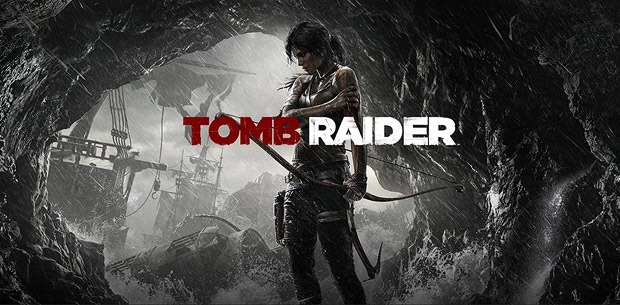
📅 Game released: 2013
Tomb Raider (2013) follows a young Lara Croft stranded on Yamatai, combining bow combat, climbing, challenge tombs, and a cinematic survival story. This PC guide compares official Steam, Epic Games Store, and GOG purchase and download options, Game of the Year Edition content, system requirements, Steam Deck support, and practical installation and performance setup.
 By Editor Zero — independently researched, edited, and maintained.
Last updated: 7 November 2026
Last reviewed: 7 November 2026
Table of Contents
- Quick Facts
- Official PC Stores, Download & Installation
- Tomb Raider (2013) Review
- Pros & Cons
- PC System Requirements
- Frequently Asked Questions
- Similar Games
Tomb Raider (2013) Quick Facts
- Game: Tomb Raider (2013) / Tomb Raider Game of the Year Edition
- Developer: Crystal Dynamics; multiplayer by Eidos-Montréal; Windows work by Nixxes Software; macOS/Linux by Feral Interactive
- Publisher: Crystal Dynamics; Feral Interactive publishes the macOS/Linux versions
- Original Publisher: Square Enix
- Genre: Action-Adventure, Third-Person Shooter, Puzzle-Solving
- Release: March 5, 2013 (original game, including Windows PC); January 30, 2014 (GOTY Edition)
- Platforms: Windows PC, macOS, Linux, PS3, Xbox 360 (original release); separate Definitive Edition also on PS4, Xbox One, Nintendo Switch, and Nintendo Switch 2
- Game of the Year Edition: Crystal Dynamics’ GOTY content list includes the main campaign, Tomb of the Lost Adventurer, six Lara outfits, eight multiplayer maps, and four additional characters; storefronts may differ in multiplayer support
- Steam Deck: Verified; Valve lists fully functional default controls, matching controller icons, legible text, and good default graphics behavior
- Steam Deck Saves: Cross-platform saved games are not supported between operating-system versions
- Engine: Foundation Engine
- Community: Reddit Tomb Raider, Steam Discussions
- PC modding: Nexus Mods hosts visual tweaks, outfits, ReShade presets, configuration changes, and other unofficial modifications
- Metacritic score: 86/100 on PC
- IGN score: 9.1/10 in IGN’s original review
- Steam user reception: Overwhelmingly Positive overall
Official PC Stores, Download & Installation
👇 Compare the official Steam, Epic Games Store, and GOG versions below before purchasing, downloading, or installing Tomb Raider (2013) Game of the Year Edition.
- PC availability: Tomb Raider Game of the Year Edition is sold for Windows PC through Steam, Epic Games Store, and GOG. Steam also carries the existing macOS and Linux releases.
- GOTY content: Crystal Dynamics’ official GOTY content list includes the main campaign, Tomb of the Lost Adventurer, six single-player outfits for Lara, eight multiplayer maps, and four additional characters. Storefronts may differ in multiplayer support.
- Steam: Steam lists both Single-player and Multi-player, plus Steam Achievements, Steam Cloud, trading cards, Remote Play, Family Sharing, and full controller support.
- Epic Games Store: Epic advertises Controller Support and Single Player. Its feature list does not advertise multiplayer.
- GOG: GOG explicitly provides a single-player-only release with no multiplayer content or functionality.
- DRM-free ownership: GOG’s version has no DRM or online activation requirement, can be installed with a fully offline installer, and does not require GOG Galaxy to play. Galaxy remains optional for features such as achievements and cloud saves.
- Preservation support: GOG’s Preservation Program build is Windows 11 verified and has been validated for Windows 10 and Windows 11, with missing extras restored and stability checked.
- Separate store licenses: Steam, Epic, and GOG ownership are separate. Do not assume that purchases, achievements, cloud saves, or DLC entitlements transfer between storefronts.
- Steam Deck: Valve rates the Steam version Verified. SteamDB lists Proton Stable as the recommended runtime and notes that cross-platform saved games are not supported between operating-system versions.
- Multiplayer: If the legacy competitive mode matters to you, Steam is the clearest PC option because it still advertises Multiplayer; Epic advertises Single Player, while GOG explicitly excludes multiplayer. The campaign itself does not require multiplayer.
- Definitive Edition: Tomb Raider: Definitive Edition is a separate enhanced rerelease for newer console platforms, including Nintendo Switch and Switch 2. Windows storefronts continue to sell the PC game as Tomb Raider Game of the Year rather than as a separate Definitive Edition PC build.

 Buy Tomb Raider GOTY on Epic Games Store


Tomb Raider (2013) Review
A tense origin story where cinematic survival sometimes clashes with action-hero combat.
Tomb Raider (2013) begins by taking away almost everything that once defined Lara Croft. There is no confident explorer arriving at an ancient ruin with a plan. Instead, a young and inexperienced Lara is thrown into a disaster, injured, separated from her friends, and forced to make decisions before she has time to understand the danger. That change does more than give the series a darker appearance. It gives climbing, fighting, and even finding the next safe place a reason beyond collecting treasure.
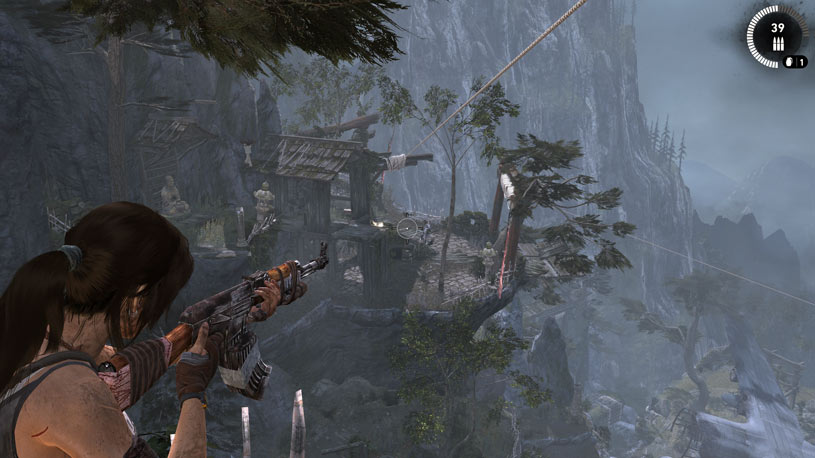
The Endurance has been wrecked by a storm near Yamatai, an island in the Dragon’s Triangle. Its scattered crew must survive a place where the weather, terrain, and hostile inhabitants all work against them. Lara’s immediate concern is finding her friends and escaping, but the island has its own disturbing history. What first looks like an expedition gone wrong becomes a struggle involving a violent cult, ancient ruins, and the mystery of Queen Himiko.
The adventure moves between connected exploration areas, dangerous climbs, firefights, environmental puzzles, and spectacular scripted escapes. Salvage and experience gradually improve Lara’s equipment and abilities, while new tools make earlier paths worth revisiting. It is a carefully directed action game with room to explore, not an open-world survival simulator. The distinction matters because its greatest strength is momentum, even when that comes at the expense of freedom.
Story & Character Development
Lara’s early vulnerability gives the story much of its impact. She trembles beside a campfire, struggles with the need to hunt, and is visibly shaken by her first human kill. These moments are effective because the game allows fear and physical exhaustion to interrupt the usual adventure-game confidence. Surviving an encounter does not immediately make her comfortable with what she has done.
Her escape from captivity is particularly uncomfortable. Injured and pursued, she has to crawl, scramble, and improvise rather than rely on the athletic control associated with earlier versions of Lara. There is a genuine sense of desperation in those opening sequences, and it makes her determination to help the other survivors easier to understand.
Yet her development is not quite as gradual as the story wants it to be. The cutscenes can continue presenting Lara as frightened and overwhelmed long after ordinary encounters have turned her into an extraordinarily capable fighter. When she survives another large group of armed enemies with relative ease, the emotional cost shown in the next scene does not always match the player’s growing confidence in combat. It is possible to appreciate her transformation while still noticing that the story and mechanics occasionally develop at different speeds.
The wider mystery helps keep the campaign moving. Yamatai’s Solarii cult, its decaying settlements, and the legends surrounding Himiko turn a simple rescue mission into something more unsettling. Roth, Sam, Jonah, Reyes, and the other Endurance survivors give Lara personal reasons to push forward, although some receive too little attention to become much more than people she must save. The strongest relationship remains between Lara and the island itself, which repeatedly tests what she is willing to endure.
Middle-Earth: Shadow of Mordor approaches loss and violence through fantasy, but shares the appeal of dangerous traversal, enemy strongholds, stealth, and forceful third-person combat.
Cinematic Presentation and Atmosphere
Yamatai is more convincing as a place than its linear story structure might suggest. Storms batter improvised shelters, wooden walkways look ready to collapse, and old buildings seem to have been occupied and repaired by desperate people for years. Even the quieter forests and caves feel uneasy. The scenery is beautiful in places, but it rarely invites Lara to relax.
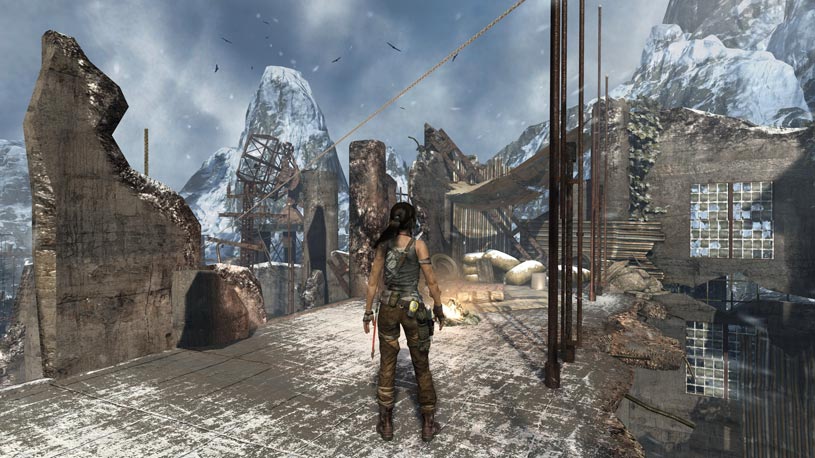
The sound design contributes just as much as the visuals. Wind pushes through ruined structures, timber creaks underfoot, distant voices suggest nearby patrols, and Lara’s strained breathing reminds you that reaching a ledge is not effortless. Walking through a quiet stretch after a firefight can be more atmospheric than another explosion. The island feels dangerous even before something attacks.
The radio tower climb is a good example of the game’s confidence in presentation. There is no elaborate puzzle to solve, yet the exposed height, rusting structure, and violent weather make each movement feel significant. The camera stays close to Lara, making the ascent more personal than a distant view of an impressive landmark could achieve.
That close, handheld approach has a downside. Camera movement and wobble are not confined to the biggest action sequences, so some players may find ordinary traversal visually tiring or even uncomfortable. The same presentation that makes a collapsing bridge feel immediate can become distracting when there is no dramatic reason for the viewpoint to keep shifting.
Quick-time events are another weak point. Early struggles sometimes demand a precisely timed input rather than the movement and combat skills the game otherwise teaches. On PC, unclear or easily missed prompts can make a dramatic escape feel like a test of recognizing interface symbols. The spectacle remains effective, but these moments expose how much of it depends on following the script.
Gameplay: Survival, Combat, and Exploration
With the bow acquired, the game finds its rhythm. Lara explores interconnected spaces, searches for salvage, fights the Solarii, and upgrades equipment at camps. Climbing and rope traversal make terrain an obstacle, while detours uncover supplies and discoveries.
Combat works especially well because it rarely makes Lara feel anchored to a single piece of cover. She automatically crouches behind suitable objects when threatened, allowing movement and aiming to continue without a separate cover button. Enemies can pressure her with gunfire, changing positions, and thrown explosives, so staying alert is more useful than remaining behind the same barrier indefinitely. A fight can move naturally from a cautious opening shot to a frantic exchange across several pieces of cover.
The bow is central to that flexibility. It handles silent takedowns, hunting, rope arrows, and several environmental interactions, which makes it feel like survival equipment rather than just another weapon slot. A well-placed arrow can remove an isolated guard before the camp reacts, while explosives and hanging lanterns provide ways to disturb groups without confronting everyone directly. The pistol, shotgun, and rifle become more important when enemies close in or a fight turns loud.
There are limits to the stealth, though. Some sections allow you to plan a quiet approach, but others trigger an ambush or a scripted confrontation regardless of how carefully you move. Once an encounter turns hostile, enemy awareness can feel more dictated by the combat sequence than by Lara’s actual position. Stealth is a valuable opening tactic, not a consistently available alternative for completing the entire game unseen.
Weapon progression also complicates the idea that the bow is always the obvious choice. A silencer for the handgun provides another quiet option, and a sufficiently upgraded pistol can make some stealth engagements much less demanding. That variety is welcome, although stronger equipment gradually reduces the vulnerability established during the opening hours.
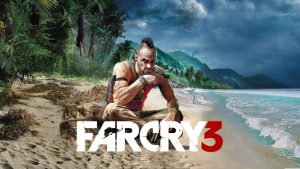
Far Cry 3 offers a similar mix of island danger, hunting, and hostile camps, but gives players greater freedom in planning encounters.
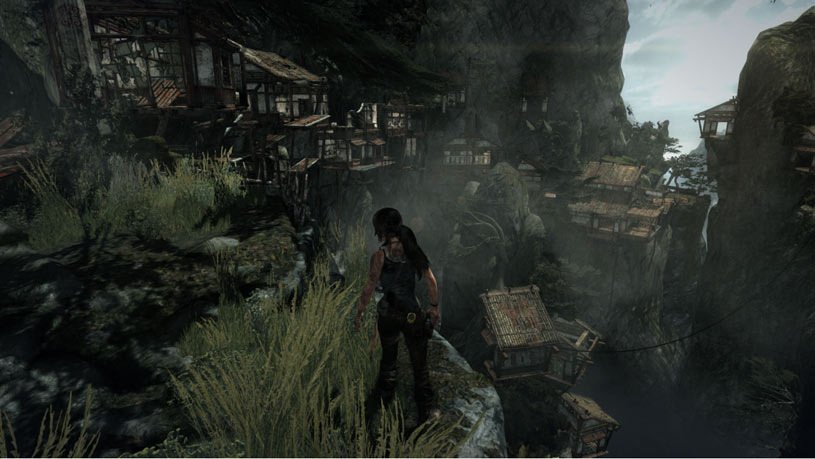
Outside combat, exploration mixes jumping, climbing, rope routes, relics, documents, GPS caches, and optional challenge tombs. Base camps provide upgrades and fast travel, making it practical to revisit areas after acquiring better equipment. The island never becomes a huge, freely explorable world, but its connected locations give a useful sense of returning with greater knowledge and control.
Collapsing buildings, spreading fires, and downhill escapes demand quick reactions amid spectacular destruction. Their timing is thrilling, even though some of the most memorable moments allow the least experimentation.
Progression & Systems
Experience points, salvage, and weapon parts give almost every encounter and detour a purpose. At camps, Lara can spend skill points across the Survivor, Hunter, and Brawler categories, improving exploration and resource collection, combat efficiency, and close-range survivability. The choices are understandable without requiring a complicated build plan, and they help translate her growing confidence into something the player can control.
Salvage upgrades are just as noticeable. Better handling, damage, capacity, and weapon-specific functions gradually change how the bow, handgun, shotgun, and rifle perform. An early firefight may encourage cautious shots and frequent repositioning; later, a stronger arsenal can make the same type of encounter much easier to control. The progression feels rewarding, even if it sometimes works against the story’s insistence that Lara is barely surviving.
Despite its survival theme, hunger, shelter, and exhaustion are not persistent resources to manage. Hunting and scavenging support upgrades and story progression. That preserves cinematic pacing but falls short of a survival simulation.
The optional tombs provide a welcome change of pace. They are compact puzzle spaces rather than the enormous, intricate complexes of classic Tomb Raider, but experimenting with fire, wind, shifting objects, and timed movement is satisfying precisely because it slows the fighting down. Reaching the reward through observation feels different from simply clearing another enemy camp.
Documents and relics deepen Yamatai’s history, though their placement creates an interesting conflict. Much of the island’s background is easier to understand if you stop and read scattered journals, but the story keeps insisting that Lara must urgently find her friends. Searching every corner for a GPS cache can weaken that urgency. There is no perfect choice here: following the narrative preserves momentum, while careful exploration reveals more of the world that makes the narrative worthwhile.
Comparisons & Design Identity
Tomb Raider (2013) sits between puzzle-focused adventures and cinematic action games. Traversal creates the feeling of discovering routes, although paths are often clearly signposted. Shooting is responsive, but encounters lack the freedom of a stealth sandbox. Its strength lies in the rhythm between systems rather than the depth of any one.
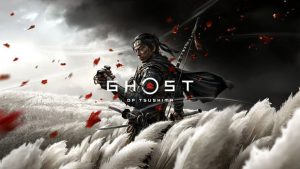
Ghost of Tsushima similarly combines cinematic storytelling, traversal, stealth, and combat. Its open-world structure is different, but both treat atmosphere as an important part of action.
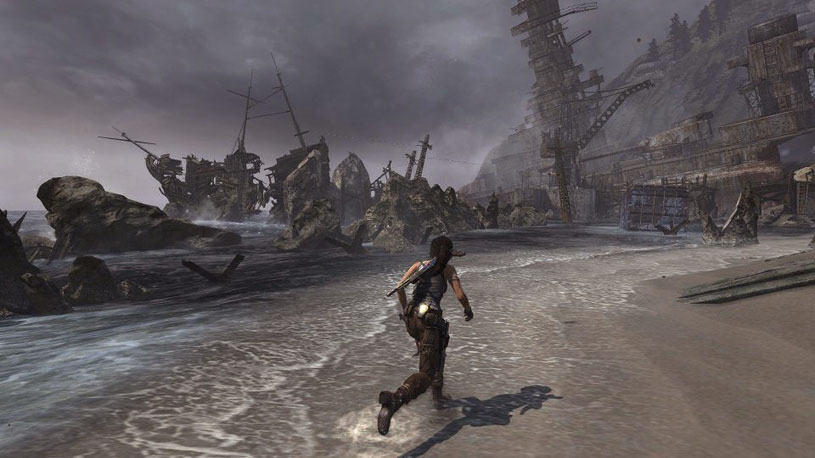
Longtime fans have good reasons to miss the larger tombs, slower navigation, and more demanding puzzles of the original series. Here, a spectacular escape can take priority over figuring out a difficult room, and a prolonged gunfight can occupy more attention than ancient architecture. Those changes make the reboot immediately approachable, but they also shift its identity toward action. Whether that is an improvement depends on what you valued in the earlier games.
Replayability & Longevity
Base-camp fast travel allows return visits for relics, documents, GPS caches, tombs, environmental challenges, and upgrades. New traversal tools can expose details missed earlier.
That extra exploration is not equally rewarding for everyone. Finding a hidden tomb or learning something meaningful from a journal can justify a detour, while sweeping the map for the last small collectible feels closer to housekeeping. The same urgency that makes the campaign exciting can make exhaustive cleanup seem strangely disconnected from Lara’s circumstances.
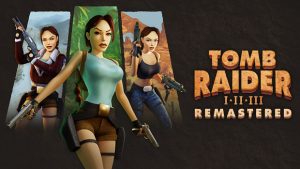
There are no branching routes or dramatically different builds. Replay value comes from the pacing, alternative weapon choices, discoveries, and set pieces. The reboot introduces the Survivor trilogy, while the remastered classics offer a contrasting style of exploration.
Verdict: A Modern Classic of Storytelling and Survival
Tomb Raider (2013) works because its best systems support a clear emotional idea: Lara is learning how to survive a place that seems determined to destroy her. The ruined island, strong sound design, responsive cover shooting, versatile bow, and carefully staged escapes make that journey consistently engaging. Exploration and upgrades provide enough choice to keep the action from feeling entirely predetermined.
Its weaknesses come from the same design. Stealth gives way to forced fights, quick-time events occasionally interrupt the tension, and Lara can become a formidable combatant faster than her frightened portrayal fully acknowledges. The optional tombs are enjoyable but too brief to replace the puzzle depth of the classics.
For players who want a focused, cinematic adventure with a strong atmosphere and satisfying movement, the reboot remains a compelling starting point. Those looking for sustained survival management, unrestricted stealth, or demanding tomb exploration may prefer something else. Its most convincing achievement is not that Lara becomes unstoppable, but that Yamatai makes the struggle to get there worth following.
Tomb Raider (2013) Pros & Cons
- Pro: Strong Lara Croft origin story that gives the island survival premise emotional weight
- Pro: Bow combat, stealth, climbing, environmental traversal, upgrades, and cinematic set pieces create a consistently varied adventure
- Pro: Yamatai remains a memorable setting through storms, ruins, forests, mountain settlements, shipwrecks, tombs, and hostile camps
- Pro: Semi-open hubs, challenge tombs, documents, relics, GPS caches, upgrades, and post-story cleanup reward exploration beyond the main route
- Pro: Steam Deck Verified support and GOG’s Preservation Program give PC players strong modern ways to revisit an older release
- Con: Smaller challenge tombs and heavier combat emphasis may disappoint players who prefer classic Tomb Raider’s larger puzzles and slower exploration
- Con: The campaign remains mostly guided despite its connected hubs, so it does not offer the freedom of a true open-world adventure
- Con: Multiplayer is now a store-dependent legacy feature rather than a consistent part of every GOTY package
- Con: TressFX and some older graphics options can still add disproportionate performance cost or expose compatibility quirks on particular PC setups
Tomb Raider (2013) PC System Requirements
Important: Steam and Epic still publish the game’s original-era Windows requirements below. GOG’s maintained Preservation Program build now lists Windows 10 or newer and has been separately verified for Windows 11.
MINIMUM:
OS: Windows XP Service Pack 3 / Windows Vista / Windows 7 / Windows 8, 32-bit or 64-bit
CPU: AMD Athlon64 X2 2.1 GHz (4050+) / Intel Core2 Duo 1.86 GHz (E6300)
RAM: 1 GB on Windows XP / 2 GB on Windows Vista or newer
GPU: AMD Radeon HD 2600 XT / NVIDIA GeForce 8600 with 512 MB VRAM
DirectX: Version 9.0c
Storage: 12 GB available space
Internet: Steam lists a broadband internet connection in its original additional requirements
RECOMMENDED:
OS: Windows Vista / Windows 7 / Windows 8
CPU: AMD Phenom II X4 955 / Intel Core i5-750
RAM: 4 GB
GPU: AMD Radeon HD 5870 / NVIDIA GeForce GTX 480 with 1 GB VRAM
DirectX: Version 11
Storage: 12 GB available space
Additional PC Performance and Setup Notes
- GOG’s Preservation Program build uses a more modern support baseline: Windows 10 or newer, 2 GB RAM minimum, 12 GB storage, and the same broad class of legacy CPU/GPU requirements. GOG separately marks the release Windows 11 verified.
- TressFX simulates Lara’s hair in greater detail and can create a larger performance cost than its visual importance suggests, especially on older or integrated graphics hardware. Disable it first when troubleshooting unexplained GPU load or uneven frame rates.
- Tessellation, shadows, anti-aliasing, post-processing, resolution, and TressFX are useful settings to reduce before assuming the game requires completely different hardware.
- The PC version includes a built-in benchmark tool, making it easier to compare graphics changes without repeatedly replaying the same campaign encounter.
- Valve notes that cross-platform saved games are not supported, so do not assume that saves created under one operating-system version will synchronize cleanly with another.
- When controller input behaves incorrectly, verify the active Steam Input layout, close duplicate controller-mapping utilities, and reconnect the gamepad before launching.
- Verify game files and test a clean configuration without ReShade, outfit replacements, custom configuration files, or other modifications before reinstalling when crashes or visual problems appear.
- Back up saves and configuration files before applying mods or manually changing graphics/configuration values.
Official Trailer
Note: The official Tomb Raider “Survivor” trailer follows Lara’s transition from an injured shipwreck survivor into someone capable of fighting to save the Endurance crew, while the written guide above adds current GOTY store differences, GOG Preservation details, system requirements, Steam Deck support, TressFX, mods, and setup guidance.
Frequently Asked Questions
Is Tomb Raider (2013) the first game in the Survivor trilogy?
Yes. Lara’s modern origin story begins here, followed by Rise of the Tomb Raider and Shadow of the Tomb Raider. Playing in that order makes the character and story progression easiest to follow.
Do I need to play the classic Tomb Raider games first?
No. This is a reboot with its own starting point for Lara. The Tomb Raider I–III Remastered collection is a separate option for players who prefer larger, more demanding puzzle spaces and classic platforming.
Which PC store version should I choose?
Steam is the clearest choice for Steam Deck integration and the original multiplayer listing. Epic Games Store advertises the single-player game with controller support, while GOG is DRM-free, offers offline installers, and explicitly excludes multiplayer. Purchases and cloud saves do not automatically transfer between stores.
Does Tomb Raider (2013) have multiplayer or campaign co-op?
The campaign is single-player only, with no story co-op. Steam still advertises the original competitive multiplayer mode, Epic lists Single Player, and GOG specifically excludes all multiplayer content and functionality. A storefront listing does not guarantee an active lobby at any given time.
Is Tomb Raider (2013) an open-world game?
Not fully. Yamatai consists of connected exploration hubs and more directed story sequences. Base-camp fast travel allows return visits to many areas for tombs, caches, and paths unlocked by later equipment.
How long does Tomb Raider (2013) take to finish?
The main campaign commonly takes about 10–15 hours. Optional tombs, relics, GPS caches, environmental challenges, and completion objectives add more time.
Can I keep exploring after finishing the story?
Yes. You can revisit accessible areas to finish optional tombs, collect documents and relics, find GPS caches, and work toward full completion without restarting the story.
Does Tomb Raider (2013) have New Game Plus or multiple endings?
No traditional New Game Plus mode or branching story endings are provided. Replay value comes mainly from another campaign run, different weapon preferences, difficulty settings, and optional completion goals.
Are the optional challenge tombs worth completing?
Yes, particularly if you want breaks from combat. They offer short environmental and physics puzzles with useful rewards, although they are smaller and simpler than the larger tombs found in later entries and the classic games.
How do Lara’s skills and equipment upgrades work?
Experience points unlock Survivor, Hunter, and Brawler skills. Salvage improves weapons and equipment, while progression tools such as rope arrows let Lara reach certain routes and collectibles that were previously inaccessible.
Can I complete Tomb Raider (2013) without fighting enemies?
No. Stealth can help Lara begin some encounters quietly, but numerous story fights and scripted ambushes require direct combat. It is not a fully pacifist or stealth-only campaign.
Does Tomb Raider (2013) work on Windows 11?
GOG explicitly marks its Preservation Program release as Windows 11 verified and lists Windows 10 or newer. Steam and Epic still display the original-era system requirements, so their legacy specifications should not be mistaken for a separate Windows 11 certification.
What is TressFX, and should I disable it?
TressFX adds more detailed dynamic movement to Lara’s hair. It can be demanding on the GPU, so switching it off is a sensible early test when frame rates drop; use the built-in benchmark to compare the result.
Does Tomb Raider (2013) support controllers on PC?
Yes. The PC release supports gamepads as well as keyboard and mouse, with full controller support listed on Steam. If inputs conflict, check for overlapping mapping software or an unexpected Steam Input configuration.
Is Tomb Raider GOTY Steam Deck Verified?
Yes. Valve rates the Steam edition Verified for controls, interface legibility, and default graphics behavior. Valve also cautions that saved games do not work across different operating-system versions.
Is Tomb Raider: Definitive Edition the same as PC GOTY?
No. The Windows stores sell the Game of the Year version of the 2013 game. Definitive Edition is a separate enhanced release associated with console platforms, including Nintendo Switch and Switch 2, rather than a separate replacement PC build.
Is Tomb Raider (2013) appropriate for younger players?
It is rated Mature 17+ by the ESRB for blood and gore, intense violence, and strong language. The survival scenes and graphic deaths are darker than those in many earlier Lara Croft adventures.
Still have questions? Check the Tomb Raider community on Reddit, Tomb Raider Steam Discussions, and official Tomb Raider GOTY page.
Sources & References
Key factual and technical information in this guide was checked against relevant official and community sources, including:
- Tomb Raider — Game of the Year Edition — official GOTY contents, developer/publisher information, and edition identity
- Steam — Tomb Raider Game of the Year and SteamDB app metadata — Steam features, overall user reception, Steam Deck compatibility, supported desktop systems, and Proton metadata
- Epic Games Store — Tomb Raider GOTY — Windows availability, controller support, Single Player feature listing, and store package description
- GOG — Tomb Raider GOTY — single-player-only status, DRM-free/offline ownership, optional GOG Galaxy use, Windows 10/11 support, and Preservation Program maintenance
- PCGamingWiki — Tomb Raider (2013) — Foundation Engine, PC/Mac/Linux release history, port-development credits, and PC-specific technical reference
- Metacritic — Tomb Raider PC Critic Reviews and IGN — Tomb Raider Review — critic scores used in Quick Facts
Similar Games Like Tomb Raider (2013)
- Rise of the Tomb Raider
- Shadow of the Tomb Raider
- Assassin’s Creed IV: Black Flag
- Far Cry 3
- Ghost of Tsushima
- Tomb Raider I-III Remastered
Found something worth playing through DecideGame?
DecideGame.com is an independent gaming project run by Editor Zero. If this guide helped you discover a game, solve a problem, or find useful information, you can support DecideGame.com and help keep new and updated game guides coming.
DecideGame.com — PC Game Buying & Setup Guides