
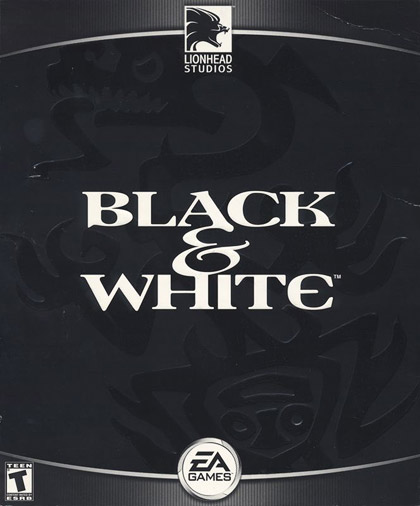
📅 Game released: 2001
Use this updated 2026 Black & White PC guide to check official download availability, modern Windows setup, system requirements, Creature Isle, mods, community fixes, and ownership options for the original 2001 game.
 By Editor Zero — independently researched, edited, and maintained.
Last updated: 7 October 2026
Last reviewed: 7 October 2026
Table of Contents
- Quick Summary
- Quick Facts
- Official PC Stores, Download & Installation
- Black & White Review
- Pros & Cons
- PC System Requirements
- Frequently Asked Questions
- Similar Games
Black & White Quick Summary
✔ Fantasy god game combining real-time strategy, village management, artificial life, miracles, and moral choices as the player rules the islands of Eden as a benevolent or destructive deity
✔ A giant creature learns from praise, punishment, observation, and the player’s actions, gradually developing habits and an alignment that can reflect the god raising it
✔ Similar to The Lord of the Rings: The Battle for Middle-earth II through real-time fantasy strategy, settlement development, supernatural powers, territorial influence, and large-scale control, although Black & White is much more focused on god-game simulation
✔ No verified current official digital storefront offers the original Windows release for normal new purchase, making legal ownership of an original retail copy particularly important
✔ Modern Windows hardware easily exceeds the game’s historical requirements, but the original disc protection creates a compatibility obstacle that matters far more than raw PC performance
✔ Creature Isle expands the creature-focused side of the game, while Black & White Deluxe combines the base game and expansion in one historical retail package
Black & White Quick Facts
Official PC Store Status, Download & Installation
👇 Use the notes below to understand the current official PC availability status for Black & White and avoid unsafe or unofficial acquisition options.
- Digital availability: No verified current official digital storefront was found for a normal new Windows purchase. PCGamingWiki lists the game as a retail release, while GOG maintains a Dreamlist entry rather than a purchasable store page.
- Existing owners: The original Windows edition was distributed on CD-ROM. Owners of legitimate retail media should retain their original disc, product information, and game files rather than relying on unofficial copies from file-sharing or abandonware sites.
- Modern Windows: The original Windows release uses SafeDisc-era copy protection that is incompatible with current Windows security behavior. Microsoft also warns that restoring the old SafeDisc driver can reduce system security, so this guide does not recommend enabling that legacy service.
- Compatibility guidance: PCGamingWiki and the Black & White Community setup guide document modern-Windows compatibility issues and community fixes. Use these resources only with a legitimately owned copy of the game.
- Creature Isle: Creature Isle is a separate expansion for the original Black & White and adds further creature-focused content, trials, abilities, enemies, and other additions rather than replacing the base campaign.
- Deluxe Edition: Historical Black & White Deluxe packages include the original game and Creature Isle, making Deluxe ownership different from owning only the base-game disc.
- openblack: openblack is an experimental open-source reimplementation of the Black & White engine. It still requires original copyrighted game assets and should not be treated as an official rerelease or substitute for owning the game.
- Multiplayer: Lionhead’s original official online service is no longer operating. Community replacement multiplayer projects exist, but they are unofficial and should be treated separately from the original supported service.

Black & White Review
A remarkable creature simulation wrapped in a god game that often mistakes attention for control.
Black & White is at its best when godhood feels less like commanding an army and more like teaching a world how to respond to you. Lionhead gives the player a floating hand instead of a conventional protagonist, then asks that hand to feed villages, throw rocks, cast miracles, punish enemies, reward a giant creature, and gradually establish a moral identity. The result blends god game, real-time strategy, artificial life, virtual pet design, and an unusually physical mouse interface into something that still feels difficult to compare directly with other strategy games.
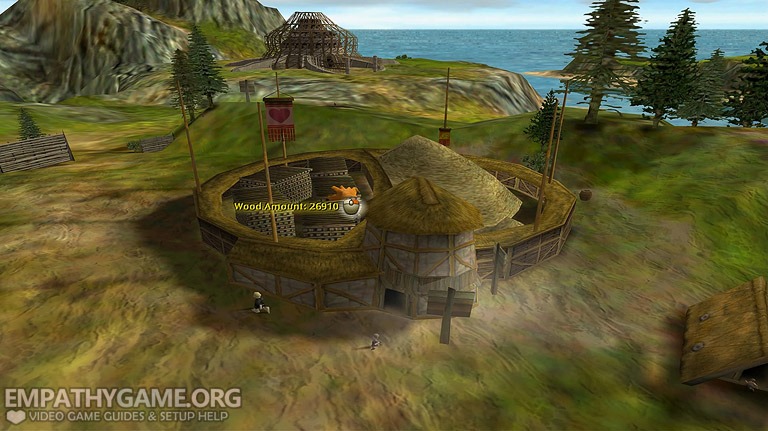
Its central contradiction is just as distinctive. The systems promise enormous freedom, yet many of them demand constant supervision. Villagers ask for resources, influence has to be extended settlement by settlement, miracles depend on worship, and a creature that appears to understand a lesson can later reveal that it learned something slightly different. Black & White therefore creates some of its best moments through uncertainty, but that same uncertainty can make routine management exhausting.
The Creature Feels Alive Because Its Rules Are Hard to Read
The creature is the reason the game remains more than a historical curiosity. Choosing an animal such as the ape, cow, or tiger gives the player a companion that begins with simple needs and gradually accumulates behaviours through observation, repetition, reward, and punishment. Petting reinforces an action; slapping discourages it. The three leashes can push learning, compassionate behaviour, or aggression, while repeated demonstrations can teach practical tasks and miracles.
What makes this system memorable is that the lesson being learned is not always obvious. Reward a creature after it carries food toward a village and the player may intend to encourage generosity, but the creature can appear to associate praise with a narrower detail: the place, the object, the type of villager, or the sequence of events around the action. The uncertainty gives training a surprisingly animal-like quality. Instead of simply filling a visible skill tree, the player watches behaviour, forms a theory about what the creature believes, then tests that theory through further reinforcement.
That opacity also explains why the creature can become both fascinating and infuriating. Learned behaviour can become oddly specific, while heavily reinforced priorities can crowd one another out. A creature trained aggressively to gather resources, water crops, impress villagers, or perform other helpful tasks may become so focused on pleasing its god that it neglects eating, drinking, or sleeping. The system does not always separate “good behaviour” from “good self-management” in the tidy way a modern simulation might. Success can therefore produce a new problem: a creature that has learned exactly what earns praise, but not when to stop doing it.
The best outcome is not perfect obedience. It is semi-autonomy. A mature creature can travel beyond the player’s normal sphere of influence, help settlements, cast miracles, attack enemies, or solve small problems without a direct order. Reaching that point can take enormous patience, and even a highly trained animal can still make disastrous decisions. That gap between capability and reliability is essential to the fantasy. The creature feels like something raised rather than unlocked.
Belief Turns Morality Into a Practical Strategy
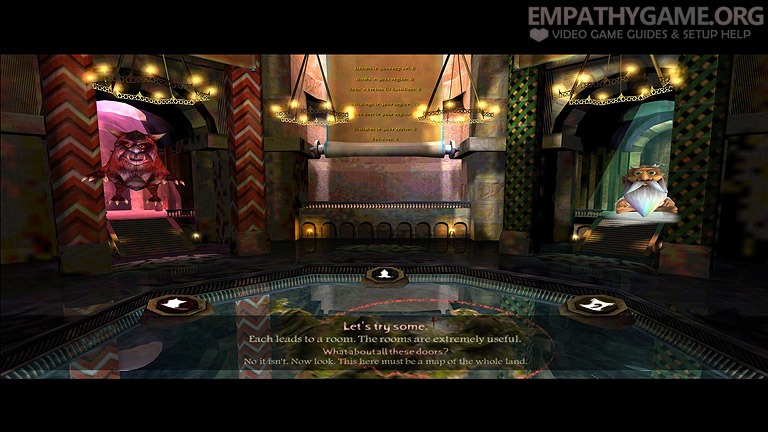
Villages are the foundation of divine power. Converting a settlement expands the sphere of influence in which the hand can act freely, so belief is both a moral relationship and a territorial resource. A benevolent god can provide food and wood, water fields, heal villagers, or use impressive miracles to win devotion. A destructive god can frighten people, burn structures, throw objects, abduct villagers, or use spectacle as intimidation. Repeating the same display loses some of its force, pushing the player toward varied demonstrations rather than one endlessly spammed trick.
The strongest part of this structure is that morality is expressed through ordinary play instead of a single dialogue choice. Feeding a village, sacrificing a villager, healing the sick, throwing someone into the sea, or allowing the creature to terrorise a settlement all contribute to the personality of the deity. Alignment alters the hand, temple, creature, and wider presentation, so morality is not confined to an abstract meter. The world gradually begins to look like the god ruling it.
More interestingly, the creature has its own moral development. A cruel god can raise a comparatively gentle companion, while a benevolent ruler can accidentally produce an animal with destructive habits. That separation prevents the morality system from collapsing into a single binary reputation score. The deity and creature become related but not identical expressions of the same playthrough.
Village Management Is Where Divine Power Starts to Feel Like Chores
Beneath the miracles is a conventional resource problem. Villagers can be assigned as farmers, builders, foresters, fishermen, craftsmen, breeders, and other disciples, while worshippers generate the prayer power used for miracles. Food, wood, housing, labour, population growth, belief, and miracle power constantly compete for attention. Raising the village totem can send more people to worship, but every worshipper is also a worker temporarily removed from ordinary production.
This is where Black & White most often undermines its own fantasy. Villages are not self-sufficient enough to disappear into the background once they are stable. Desire flags for food, buildings, offspring, and other needs do not behave like simple emergency meters. A village can appear broadly satisfied while still insisting on more construction or more children, and a demand may briefly fall when the player starts addressing it only to rise again once the immediate task is complete. The result is a peculiar kind of benevolent pressure: helping a settlement can generate more work instead of bringing closure.
Scaffolds and physical building placement reinforce that friction. Constructing housing or expanding a settlement is tactile and thematically consistent with the hand interface, but repeated intervention turns divine management into logistics. Contested villages can also become prolonged belief tug-of-wars in which both sides keep performing miracles, influencing citizens, and undoing each other’s progress. The game is much more imaginative than a conventional base-building RTS, yet it is not always more efficient.
The Hand Interface Makes Simple Actions Memorable and Difficult
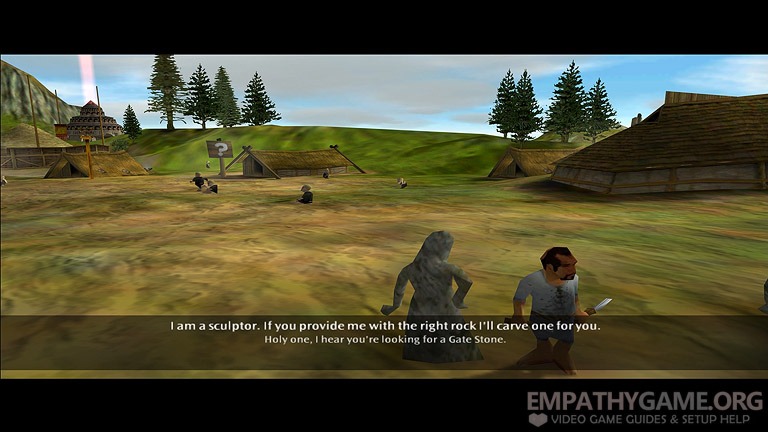
The decision to hide a traditional strategy HUD gives Eden an unusual physical presence. The hand picks up villagers and resources directly, grabs trees, throws rocks, manipulates objects, and moves the camera through gestures rather than relying on a dense layer of buttons and panels. Miracles can be selected with mouse gestures, turning spellcasting into something closer to drawing a command into the world.
When it works, the interface is inseparable from the fantasy. Throwing an object accurately feels different from clicking an attack command because the player supplies the motion. Sweeping across a settlement to inspect people and resources feels like physically hovering over a miniature world. The lack of a permanent interface also lets the islands occupy more of the screen and supports the idea that the player is a presence inside Eden rather than an operator outside it.
The cost is precision. Camera navigation takes practice, gestures are not always recognised cleanly, and small actions can require more effort than their strategic importance deserves. Later strategy games generally make resource assignment, camera control, and ability selection faster for good reason. Black & White deliberately sacrifices some of that efficiency for embodiment. Whether the trade is charming or irritating depends heavily on how much patience the player has for interfaces that behave like mechanics rather than transparent tools.
The Campaign Gets Stronger When Preparation Matters More Than Spectacle
The five-land campaign gives the sandbox a loose structure through rival gods, Nemesis, and the pieces of the Creed, but the central plot is mostly a reason to move between new strategic problems. The good and evil consciences provide more personality, commenting on decisions from opposite moral extremes, while optional village problems and strange side incidents usually leave a stronger impression than the main narrative.
The campaign becomes more interesting when geography starts to pressure the systems. Land 3 is a particularly sharp example because expansion can turn into a resource trap. Distant villages stretch influence outward, wood becomes increasingly precious, and hostile pressure can damage settlements that are already operating near their limits. The same act that appears to represent progress—pushing farther across the map—can consume the resources needed to sustain that progress. It is one of the clearest moments where the game stops being a toy box and demands actual strategic planning.
Inter-land preparation also matters more than the campaign initially suggests. The portal used when leaving a land can carry useful supplies into the next one, including resources, villagers, artifacts, and miracle bubbles. Loading it well turns the end of a chapter into a logistical decision rather than a simple exit. A player who leaves behind excess food, wood, or useful miracle access may begin the next land under far more pressure than one who treated the transition as part of the strategy. That continuity gives the campaign a welcome sense that preparation survives beyond a single map.
Atmosphere Carries More Character Than the Story
Eden’s personality comes from response rather than exposition. Villagers react to miracles, the creature develops visible habits, the temple changes with alignment, the god hand itself reflects morality, and the music shifts to support the direction of the playthrough. The individual models and animations are unmistakably from an early-2000s PC game, but the visual transformation of the world still communicates consequences efficiently.
The scale of the camera helps. Moving from a close view of a villager or creature to a broad look across an island reinforces the strange mix of intimacy and omnipotence. Few games ask the player to care about whether one giant animal has eaten recently and, moments later, treat an entire settlement as one piece in a territorial struggle. That contrast gives Black & White much of its atmosphere.
The story never matches the systems for complexity. Nemesis provides a clear rival and the Creed gives the campaign an objective, but the narrative is functional scaffolding around the simulation. The memorable stories are emergent: a creature learning the wrong lesson, a supposedly stable village demanding more attention, a miracle solving one shortage while creating another, or a moral experiment producing consequences the player did not anticipate.
Replayability Comes From Different Relationships With the Same Systems
There is no conventional progression tree carrying the experience. Growth comes through territory, access to miracles, creature development, settlement control, and better understanding of how the systems react. The creature’s long learning curve is the closest thing to a persistent character build. Training it toward generosity, aggression, self-sufficiency, spectacle, or utility can change how much direct supervision later situations require.
That makes another campaign meaningful even when the broad objectives are familiar. A different moral approach changes how villages are converted, while choosing or training a different creature changes the texture of supervision. Skirmish play removes much of the scripted campaign structure and foregrounds god-versus-god competition, which is useful for experimenting with strategies but also exposes how repetitive village conversion can become without narrative interruptions.
The game’s replay value therefore depends less on discovering new content than on testing different relationships between systems. One run can become a benevolent exercise in sustaining villages; another can emphasise fear and destruction; a third can focus on creating a creature capable of operating with minimal supervision. The more interesting question is not whether the player can win differently, but what kind of god-and-creature partnership emerges while trying.
Final Verdict
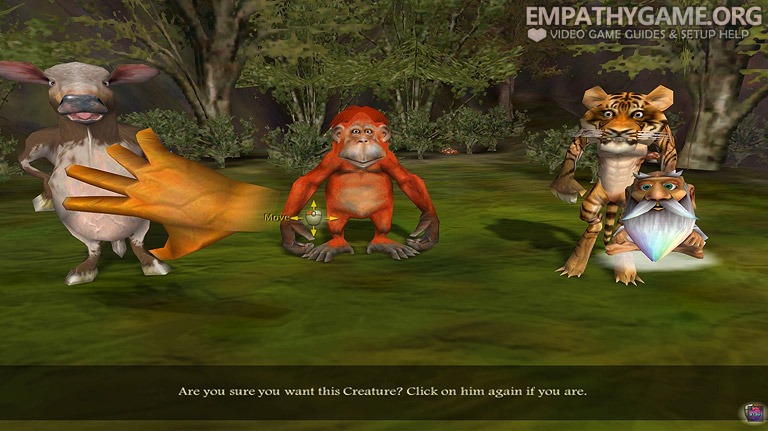
Black & White remains compelling because its most ambitious idea is not any individual miracle, village, or morality choice. It is the attempt to make behaviour itself into a strategy system. Villagers respond to belief, territory responds to villages, miracles depend on worship, the world reflects alignment, and the creature absorbs lessons from the same actions the player uses to govern everyone else. When those systems overlap cleanly, the game creates situations that feel less scripted than remembered.
The same design also explains its weaknesses. Village desires can become endless maintenance, the campaign can turn territorial growth into economic strain, the camera and gesture controls demand patience, and creature training is often so opaque that success is difficult to separate from misunderstanding. The story is secondary, and players looking for the efficiency and clarity of a conventional RTS may find the constant physical intervention exhausting.
For players interested in artificial life, emergent behaviour, moral experimentation, and strategy games willing to make their interface part of the fiction, those frustrations are inseparable from what makes the game special. Black & White has aged unevenly, but the creature still feels more like a relationship than a unit, and that remains its strongest achievement.
Black & White Pros & Cons
Black & White PC System Requirements
Electronic Arts and Lionhead no longer maintain a current official system-requirements page for the original Windows release. The historical retail minimum specifications below are preserved by PCGamingWiki and are included as archival reference rather than as a modern compatibility guarantee.
HISTORICAL RETAIL MINIMUM:
OS: Windows 95, Windows 98, Windows ME, or Windows 2000
CPU: Intel Pentium II 350 MHz
RAM: 64 MB
GPU: 8 MB VRAM, DirectX 7.0a-compatible graphics hardware
DirectX: DirectX 7.0a
Storage: 600 MB
Optical Drive: 4X CD-ROM
Recommended requirements: A reliable surviving official recommended specification could not be verified, so this guide does not invent one.
Additional PC Performance and Setup Notes
Modern PCs exceed the original hardware requirements by a huge margin, so processor, memory, and graphics performance are generally not the main obstacles. Compatibility with the game’s early-2000s software environment is much more important.
The retail Windows release’s SafeDisc protection is not compatible with Windows 10 or Windows 11 in its original form. Microsoft has also warned that restoring the associated legacy driver can weaken system security, so enabling that deprecated driver is not recommended here.
Community compatibility documentation can also address high-resolution displays, modern graphics hardware, save locations, and other age-related problems. The experimental openblack engine provides another community route for technically inclined owners, but it requires the original game assets and is not an official port.
Video Trailer
Frequently Asked Questions
Is Black & White worth playing in 2026?
Yes, especially for players interested in unusual strategy games, god games, artificial-life systems, and sandbox experimentation. Its creature training and morality systems remain distinctive, although the old interface, slow campaign pacing, and modern Windows compatibility hurdles require more patience than most newer PC games.
Is Black & White an open-world game?
Not in the modern seamless-open-world sense. The campaign is divided across five separate lands, but each land gives you considerable freedom to explore, develop villages, train your creature, complete optional Silver Reward Scrolls, and decide how to gain followers.
Do you have to choose between being good or evil?
No. Alignment changes gradually according to your actions, so you can behave benevolently in some situations and cruelly in others rather than selecting a permanent morality route at the beginning.
Can your creature have a different alignment from your god?
Yes. Your god and creature track morality separately, so it is possible to rule as an evil god while raising a benevolent creature, or do the reverse. How you reward, punish, and train the creature strongly influences its own behavior and appearance.
How does creature training work in Black & White?
The creature learns by watching actions, experiencing situations, and receiving positive or negative reinforcement from the player. Repetition matters because the creature can learn not only an action but also associations about when, where, and around whom that behavior should be used.
What do the three creature leashes do?
The Leash of Learning encourages the creature to pay closer attention and is useful while teaching behavior or miracles. The Leash of Compassion encourages helpful behavior, while the Leash of Aggression pushes the creature toward destructive or hostile actions.
Can your creature learn to cast miracles?
Yes. A creature can learn many miracles by watching the player demonstrate them repeatedly while it is paying attention. Teaching the context is important too, because knowing a miracle does not automatically mean the creature will understand when it should use it.
Why does my creature keep repeating unwanted behavior?
Black & White’s creature remembers learned associations, so one correction may not erase a habit that has already been reinforced several times. Consistent praise for the desired behavior and punishment for the unwanted action is usually more effective than reacting differently each time.
Can you change creatures without losing all your training?
Yes. Creature swapping changes the animal body while retaining the creature’s mind and most trained characteristics, rather than starting with a completely untrained companion. Different species still have their own natural strengths, weaknesses, and behavioral tendencies.
How does influence work in Black & White?
Influence is the area in which your godly hand can interact freely with the world. Controlling villages, increasing belief, growing the population, and developing settlements can expand that territory and let you reach farther across the land.
How do you take control of another village?
You must generate enough belief among its inhabitants to convert the settlement to your god. That can be done through impressive miracles, helping villagers, using your creature, expanding nearby influence, or frightening and destroying things if you are following a more destructive strategy.
What is prayer power used for?
Worshippers at your temple generate prayer power, which fuels miracles. Raising the village totem sends more villagers to worship, giving you more miracle power but temporarily taking those people away from normal village work.
Can you use miracles outside your influence?
Your godly hand is strongly restricted once it moves beyond your influence, so expanding territory is an important part of progression. Your creature is different: it can travel and act outside your influence, which makes a well-trained creature especially valuable when trying to affect distant villages.
Does Black & White have a skirmish or sandbox mode?
Yes. Skirmish mode lets you compete against AI gods on dedicated maps, while God’s Playground provides a less campaign-focused place to experiment with the game’s systems. Skirmish is particularly useful for players who enjoy the village-conversion and god-versus-god side of the game without replaying the full story.
Does Black & White multiplayer still work?
The original official online service is no longer operating, but the PC game was designed with LAN multiplayer as well as internet play. Community multiplayer solutions also exist, although they are unofficial and may require additional configuration on modern systems.
Does Black & White support Xbox or PlayStation controllers?
Not as a conventional modern gamepad-controlled game. Black & White was designed primarily around keyboard and mouse interaction, including hand gestures, object manipulation, camera movement, and miracle casting, so a mouse remains the intended control method.
Does Black & White work on Windows 10 and Windows 11?
It can be made to work, but an untouched retail installation is not reliably compatible with modern Windows because its original SafeDisc protection is no longer supported. Community compatibility fixes are commonly used by legitimate owners; re-enabling Microsoft’s obsolete SafeDisc driver is not recommended because Microsoft has documented security risks associated with it.
Can you buy Black & White on Steam or GOG?
No normal official Steam or GOG purchase is available for the original game. GOG has a Black & White Dreamlist entry, but that is a request/preservation page rather than a store listing that grants ownership or an official download.
What is openblack?
openblack is an experimental open-source reimplementation of the Black & White engine intended to run the game on modern systems. It is not an official remaster and does not include the copyrighted game content, so users still need original Black & White game assets from a legitimately owned copy.
What is Black & White: Creature Isle?
Creature Isle is the official expansion to the original Black & White and focuses much more heavily on the creature itself, with new creatures, abilities, challenges, enemies, and a separate island-based adventure. It requires the original game and is best treated as additional content rather than a replacement for the main campaign.
What is the difference between Black & White and Black & White 2?
The original places greater emphasis on experimental creature learning, belief, influence, miracles, and the feeling of indirectly shaping a living world. Black & White 2 expands city building and introduces much more conventional RTS warfare and controllable armies, while creature training becomes more explicit and easier to manage.
Still have questions? Check the Black & White Community forums for gameplay and modding discussion, or the Black & White Technical Help forum for modern PC compatibility and installation questions.
Sources & References
Key factual and technical information in this guide was checked against relevant official and community sources, including:
- PCGamingWiki — Black & White — availability, original PC requirements, SafeDisc compatibility, version differences, expansion information, and multiplayer status
- Microsoft Support — SafeDisc / secdrv security update — security background explaining why the legacy disc-protection driver can prevent older games from running normally
- GOG Dreamlist — Black & White — current GOG preservation-request status rather than a normal purchasable GOG release
- Black & White Community — Modern Windows Setup — community-maintained Windows compatibility and technical guidance for legitimate owners
- openblack on GitHub — experimental open-source engine reimplementation and its requirement for original Black & White game assets
- Metacritic — Black & White — original PC release and critic-reception information
Similar Games Like Black & White
- Black & White 2
- The Lord of the Rings: The Battle for Middle-earth II
- The Lord of the Rings: The Battle for Middle-earth
- The Movies
- Medieval Dynasty
- Mount & Blade II: Bannerlord

Found something worth playing through DecideGame?
DecideGame.com is an independent gaming project run by Editor Zero. If this guide helped you discover a game, solve a problem, or find useful information, you can support DecideGame.com and help keep new and updated game guides coming.
DecideGame — PC Game Guides, Reviews & Setup Help