
📅 Game released: 2025
The Elder Scrolls IV: Oblivion Remastered revisits Cyrodiil with rebuilt visuals while preserving its open-world fantasy RPG quests, guilds, and unusual freedom. This PC guide compares official Steam and Xbox download and installation options, Game Pass, Deluxe Edition content, Steam Deck support, mods, and system requirements.
 By Editor Zero — independently researched, edited, and maintained.
Last updated: 13 November 2026
Last reviewed: 13 November 2026
Table of Contents
- Quick Facts
- Official PC Stores, Download & Installation
- The Elder Scrolls IV: Oblivion Remastered Review
- Pros & Cons
- PC System Requirements
- Frequently Asked Questions
- Similar Games
The Elder Scrolls IV: Oblivion Remastered Quick Facts
- Game: The Elder Scrolls IV: Oblivion Remastered
- Developer: Bethesda Game Studios, Virtuos
- Publisher: Bethesda Softworks
- Genre: Action RPG, Open World, RPG, Fantasy
- Release: April 22, 2025
- Platforms: Windows PC, PS5, Xbox Series X|S, Nintendo Switch 2
- Mode: Single-player; no official co-op or multiplayer
- Cloud access: Xbox Cloud Gaming with an eligible Game Pass tier or qualifying owned-game streaming access
- Steam Deck: Verified; external controller selection may need adjustment
- Engine: Unreal Engine 5 visual presentation over the original Oblivion gameplay and world-logic foundation
- Community: Steam Discussions, r/oblivion, Bethesda Support
- PC modding: Community mods exist; Bethesda does not officially support modding the remaster
- Metacritic score: 80/100 (PC)
- IGN score: 8/10 (multiplatform review, tested on Xbox Series X)
- OpenCritic average: 81/100 (multiplatform critic average)
- PC Gamer score: 84/100 (PC)
- Steam user reception: Mostly Positive overall
Official PC Stores, Download & Installation
👇 Compare the official PC options below before purchasing, downloading, or installing The Elder Scrolls IV: Oblivion Remastered.
- Availability: The official Windows versions are sold through Steam and the Xbox app / Microsoft Store; there is no separate Epic Games Store release of the remaster.
- Steam: Choose Steam for a conventional PC purchase, Steam Cloud, achievements, community guides, Steam Input options, and the simplest route to Steam Deck use.
- Xbox app: Choose the Xbox app / Microsoft Store version if you prefer Microsoft account integration, Xbox achievements, Xbox cloud saves, or Game Pass access.
- Game Pass: Xbox lists the game in Game Pass Premium, PC Game Pass, and Ultimate. Premium and Ultimate include eligible cloud access; an owned copy can also qualify for streaming under other applicable membership terms. Catalogs and cloud rights vary by region and tier.
- Xbox Play Anywhere: A qualifying digital Microsoft/Xbox purchase works on Windows PC and Xbox Series X|S with Xbox cloud saves. Steam ownership and Steam Cloud saves are separate and do not transfer through Play Anywhere.
- Standard Edition: Includes the base game, Shivering Isles, Knights of the Nine, Fighter’s Stronghold, Spell Tomes, Vile Lair, Mehrune’s Razor, The Thieves Den, Wizard’s Tower, The Orrery, and Horse Armor Pack.
- Deluxe Edition: Adds quests for Akatosh and Mehrunes Dagon armor, weapon, and horse-armor sets plus the Digital Artbook and Soundtrack App; it does not add another major story expansion.
- Deluxe Upgrade: Digital Standard Edition owners can purchase the separate Deluxe Upgrade; the base game is required. Check your existing entitlement before purchasing duplicate content.
- Steam Deck: Valve’s compatibility data marks the game Verified, including legible text and working default controls, but the demanding open world can still produce variable frame pacing, heat, and short battery life.
- Installation: Reserve at least 125 GB on an SSD, update Windows and graphics drivers, then verify or repair the installation through Steam or the Xbox app if the game will not launch.
- Mods: Community-made PC mods are available but unsupported by Bethesda. Back up clean saves and test a clean game installation before investigating problems caused by third-party modifications.
 Buy Oblivion Remastered on Steam
 Buy or install Oblivion Remastered on Xbox / Microsoft Store

The Elder Scrolls IV: Oblivion Remastered Review
A Beautiful Return to Cyrodiil That Still Feels Wonderfully Strange
The most important thing about Oblivion Remastered is that it is still unmistakably Oblivion. It has not traded Bethesda’s 2006 RPG for a modern open-world formula, and it makes little effort to hide its peculiar rhythms. Cyrodiil still runs on rumors, awkward conversations, improvised character builds, and journeys that begin with a sensible destination before disappearing into a ruin beside the road. The achievement is not that the remaster makes everything new. Its rebuilt environments, clearer interface, sprinting, and improved third-person play make the original adventure easier to inhabit without sanding away what makes it strange.
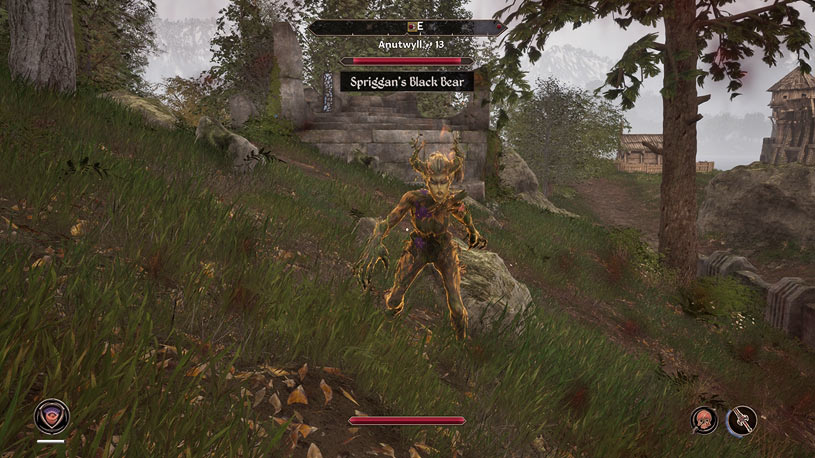
That balance becomes apparent when you leave the Imperial Prison. The main story urgently needs you to find Martin Septim, protect the Amulet of Kings, and confront a Daedric invasion. Cyrodiil, meanwhile, seems in no hurry at all. A ruin appears across the water. A guard mentions a local problem. An innkeeper has a rumor that sounds harmless. Soon the central quest is waiting while you sell stolen silverware, investigate an Ayleid ruin, or help somebody whose small request becomes much stranger than expected.
This freedom works because the detours are rarely just map icons. Skills improve through use, loot provides practical reasons to explore, and cities are networks of gossip, shops, homes, guilds, and conflicting personalities. The Dark Brotherhood and Thieves Guild are particularly effective at turning an objective into a question of method: who should be approached, what can be stolen, and what happens if a plan goes wrong? Cyrodiil is less densely staged than some newer worlds, but its ordinary conversations can still lead to wonderfully unpredictable stories.
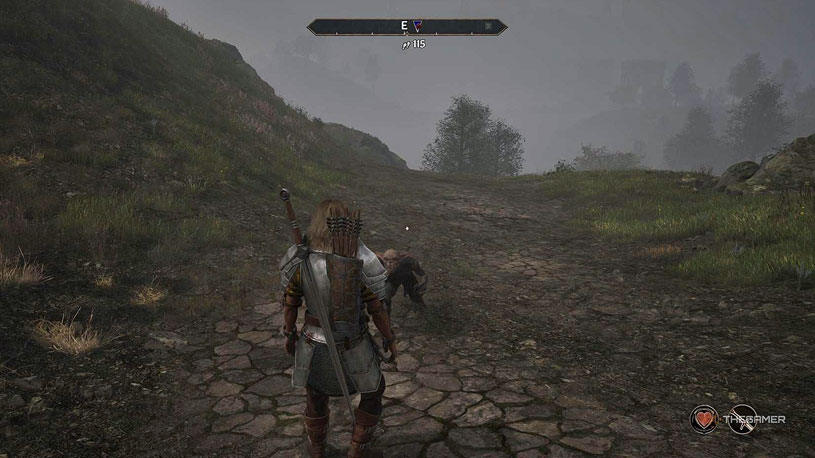
A World Rebuilt Without Losing Its Personality
The visual transformation gives familiar places a different weight. Forests have thicker undergrowth, stonework looks older, and interior lighting makes even a routine conversation feel more grounded in its surroundings. The Imperial City’s silhouette finally has the presence its location deserves. Bruma feels colder, Anvil warmer, and an Oblivion Gate can overwhelm a peaceful landscape with fire, smoke, and unnatural red light. Improved faces and lip syncing make long conversations easier to follow, even when the conversation itself is gloriously odd.
That oddness is important. NPCs still trade bizarre rumors, change subjects without warning, and occasionally let their routines collide in ways no writer would deliberately stage. The remaster preserves the bright fantasy palette and theatrical voices rather than chasing a relentlessly serious mood. Cyrodiil feels like a place full of people who have their own concerns, even when those concerns involve mudcrabs at an extraordinarily inappropriate moment.
The redesigned maps, quest screens, inventory, and dialogue menus reduce friction in a game that asks you to spend considerable time reading and sorting. Sprinting improves travel, while the better third-person camera makes playing with a visible character a reasonable choice instead of a novelty. Some of these changes matter more over a long adventure than the new lighting. They let attention remain on where you want to go, not on negotiating the interface to get there.
For a different kind of freedom, Elden Ring shares the pleasure of spotting a distant landmark and choosing a route toward it, but asks much more of the player in combat. Oblivion’s attraction is broader and often gentler: the destination may matter less than the strange person you meet along the way.
Combat, Magic, Stealth, and Character Growth
Combat has more force without becoming a modern action system. Clearer hit reactions, stronger sound, smoother movement, and better third-person aiming make weapons more satisfying to handle. Blocking and repositioning are easier to read, and archery no longer feels quite so awkward. But melee exchanges can still lack precision, especially when enemies endure a long sequence of similar blows. Better animation cannot entirely solve an encounter that has too few interesting decisions.
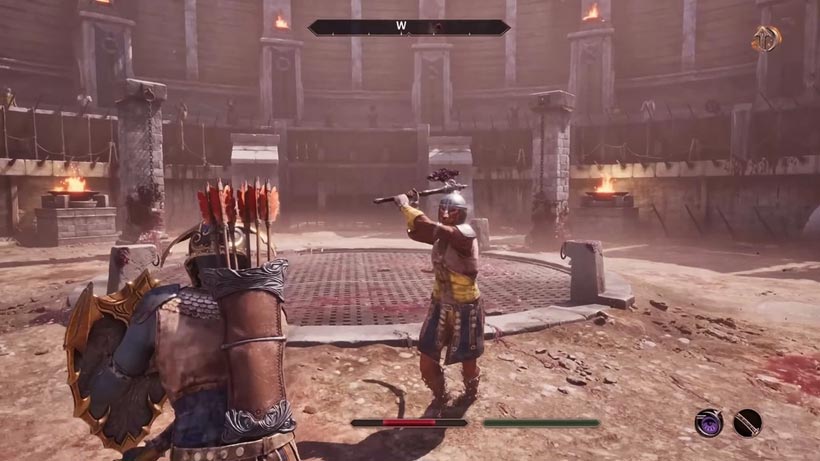
Difficulty makes that weakness more apparent. Adept may feel forgiving for a capable character, while Expert can make familiar enemies considerably more durable. Journeyman provides a useful step between them, and separate player-damage and enemy-damage settings offer further control. Even so, tougher encounters do not automatically become more tactical; reducing damage dealt can simply extend the same exchanges of attacks and healing. The additional flexibility helps, but it cannot give the underlying combat more decisions than it already has.
Magic is where the systems become more interesting than the fighting animations. A battlemage can open with fire, summon help, heal after a mistake, then finish with a sword. Illusion offers thieves another way around a guarded room; Alteration and Restoration help fragile builds survive. Spellmaking eventually lets experienced characters combine effects into wonderfully unreasonable solutions. The remaster also changes the incentives for developing magic skills: higher-cost spells generally produce more progress per cast, so using substantial summons or custom spells has a training value that endlessly repeating a trivial spell did not have in the same way.
Alchemy deserves particular attention because the new interface changes how practical experimentation feels. Ingredients can be filtered by specific effects, including combinations that must match all selected properties, and shared effects are highlighted during mixing. Instead of memorizing an ingredient list, you can deliberately build a potion around Restore Magicka and Fortify Magicka, then notice an unexpected third benefit. The improvement is not merely visual. It makes one of Oblivion’s most flexible systems easier to understand from inside the game.
That flexibility can change an entire character concept. The Atronach birthsign removes normal Magicka regeneration, a serious restriction for a mage, yet a developed Alchemy skill can supply powerful Restore Magicka potions in quantity. Careful preparation turns an apparent weakness into something manageable. The combination is satisfying precisely because the solution comes from another system rather than an automatic character upgrade.
Stealth has similar hidden interactions. Sneak, locks, bounties, persuasion, and bribery give non-combat decisions consequences, especially in the Thieves Guild and Dark Brotherhood. But magical concealment is not always as straightforward as a character sheet suggests. Even heavy gauntlets worn with otherwise ordinary mage clothing can reduce spell effectiveness; a spell intended to deliver 100% Chameleon may then fall short of its promise. The lesson is less about a trick build than about Oblivion’s habit of making seemingly minor equipment choices affect another part of your character.
Leveling is more understandable than in the original. Skills still grow through use, but attribute choices demand less careful bookkeeping. A custom class can establish a direction without locking you into one approach. Enemy scaling still punishes neglected combat skills, however, and leveling primarily through non-combat activities can leave a character facing increasingly durable threats. The repair economy adds another wrinkle. Powerful armor and weapons can be costly to maintain early on, while repair hammers and a growing Armorer skill eventually make durability much less burdensome. Progress is not simply about finding stronger equipment; it is also about learning to afford and sustain it.
Complete Content and Long-Term Replay Value
Oblivion Remastered is generous even before considering how differently its quests can be approached. Alongside the main campaign are guild stories, Daedric quests, the Arena, homes, dungeons, and the original expansions. Knights of the Nine offers a more focused heroic pilgrimage and relic hunt. Shivering Isles is the more dramatic departure: a realm split between Mania and Dementia, where strange landscapes and unsettling personalities make the familiar rules of Cyrodiil feel less reliable.
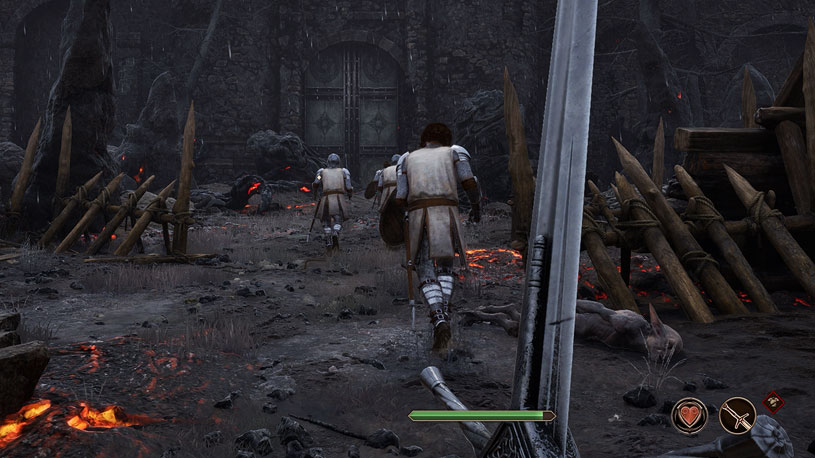
The appeal of those adventures lies in their different moods. A character devoted to honor can find purpose in Knights of the Nine, while a more unpredictable wanderer fits naturally into Shivering Isles. Neither expansion requires every playthrough to follow the same path. A heavily armored fighter confronts problems directly; a thief builds a life around valuables and careful escapes; a mage can treat a dungeon as a laboratory for summons, control spells, and custom effects.
Quest order also affects more than the story. Some unique rewards retain the strength appropriate to the level at which they are obtained. Chillrend, for instance, can have a much weaker frost enchantment when earned early and does not simply grow stronger with its owner. That leaves an awkward choice in a game built around curiosity: follow an interesting quest immediately, or postpone it to secure a better version of its reward. The improved character-leveling model has not eliminated every old incentive to plan ahead.
If local stories are your favorite reason to stray from the road, The Witcher 3: Wild Hunt provides a more cinematic, authored variation on that pleasure. Kingdom Come: Deliverance II instead grounds the appeal of practice, reputation, and daily life in a historical setting. Oblivion remains unusual because it lets a heroic destiny coexist with so many smaller identities.
Lasting Rough Edges
The Oblivion Gates expose the limits of that freedom. Their first appearance is intimidating, but repeated visits often involve variations on the same sequence: enter a hostile realm, navigate towers and switches, climb toward the central tower, and take the Sigil Stone. Once the layout becomes familiar, it is frequently possible to run past much of the opposition. An event presented as a dangerous invasion can gradually feel like a route to complete, rather than an encounter worth engaging with. The possibility of slipping through without fighting is amusing for an unconventional character, but it also reveals how thin the objective structure can become.
Other familiar problems remain. Cave and fort layouts repeat, persuasion has its peculiar logic, enemy scaling can flatten the pleasure of becoming stronger, and NPC pathfinding sometimes turns serious moments into accidental comedy. The dramatically improved presentation can also be interrupted by uneven frame pacing during exploration. These are not all equally serious defects, but together they make the boundary between charming eccentricity and unwelcome friction difficult to ignore.
This is the remaster’s central compromise. Veterans may be delighted that Oblivion’s odd systems survive, including the ways they can be manipulated. Newcomers accustomed to carefully tuned encounters and consistently polished simulations may be less forgiving. The new visuals are convincing enough that the older behavior sometimes becomes more conspicuous, not less.
Final Verdict
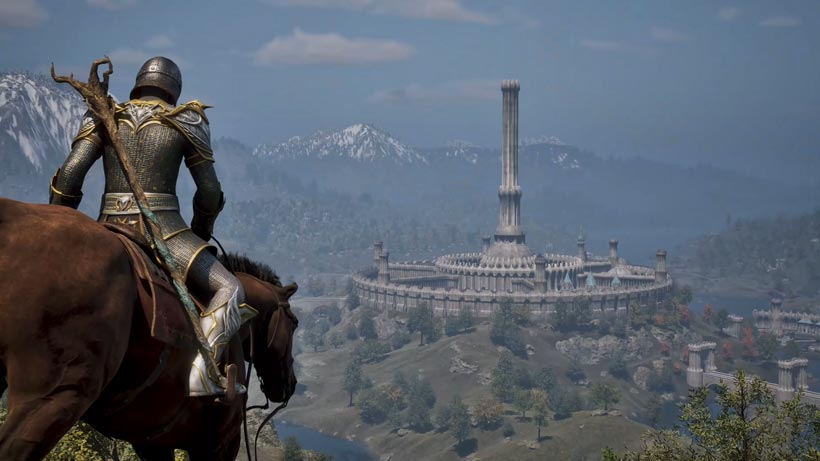
Oblivion Remastered succeeds because it makes Cyrodiil easier to enter without trying to make it behave like every other fantasy RPG. The improved movement, presentation, menus, and character progression make ordinary exploration more inviting. Underneath them are still the memorable guilds, flexible roles, strange conversations, and unexpected detours that give the adventure its identity.
It also asks for patience. Combat can be imprecise, difficulty uneven, Oblivion Gates repetitive, and certain progression choices unnecessarily punishing. Some players will reasonably prefer a world with tighter systems and fewer surprises of the frustrating kind. Yet there is a rare satisfaction in a game that allows an alchemist, thief, mage, or wandering fighter to find such different solutions to familiar problems. Returning players have a richer way to revisit Bethesda’s eccentric RPG, while newcomers have an accessible introduction to its particular strengths. Those strengths are substantial, provided you can accept that Cyrodiil’s freedom has never been entirely tidy.
For more elaborate party relationships and consequential choices, Baldur’s Gate 3 offers a very different kind of role-playing depth. Oblivion’s lasting attraction is simpler to explain, even if the game itself rarely is: a road, a rumor, and the freedom to forget where you were going.
The Elder Scrolls IV: Oblivion Remastered Pros & Cons
- Pro: Expansive Cyrodiil with memorable guilds, side quests, Daedric adventures, dungeons, and strong role-playing freedom
- Pro: Major visual and interface overhaul that preserves the original world, quest structure, and eccentric personality
- Pro: Shivering Isles and Knights of the Nine add contrasting questlines, settings, and long-term replay value
- Pro: Flexible melee, magic, stealth, guild, and custom-class choices reward different role-playing approaches
- Con: Stutter and uneven frame pacing can interrupt traversal, while some legacy quest bugs persist
- Con: Combat, enemy scaling, repeated dungeon layouts, and NPC behavior may feel dated
- Con: The remaster retains the old game’s occasional awkwardness rather than rebuilding every underlying system
The Elder Scrolls IV: Oblivion Remastered PC System Requirements
MINIMUM:
OS: Windows 10 version 21H1 (64-bit)
CPU: AMD Ryzen 5 2600X / Intel Core i7-6800K
RAM: 16 GB
GPU: AMD Radeon RX 5700 / NVIDIA GeForce GTX 1070 Ti
DirectX: Version 12
Storage: 125 GB available space
Drive: SSD required
RECOMMENDED:
OS: Windows 10/11 with updates (64-bit)
CPU: AMD Ryzen 5 3600X / Intel Core i5-10600K
RAM: 32 GB
GPU: AMD Radeon RX 6800 XT / NVIDIA GeForce RTX 2080
DirectX: Version 12
Storage: 125 GB available space
Drive: SSD required
Additional: Performance scales with better hardware
Additional PC Performance and Setup Notes
An SSD is required, not merely recommended. On systems near the minimum requirements, start with modest graphics settings; demanding outdoor areas may still cause inconsistent frame pacing. Reducing shadows and other expensive visual effects can help, but no settings change guarantees perfectly smooth performance on every system.
If the game crashes or fails to start, update the graphics driver, check available SSD space, close conflicting overlays, and use Steam’s Verify Installed Files or the Xbox app’s repair options. Try a clean launch without unsupported community mods before changing configuration files or assuming a save is corrupted.
Video Review
Note: This video review covers the core Oblivion Remastered experience; current PC stores, editions, system requirements, Steam Deck status, modding limits, and setup guidance are covered above.
Frequently Asked Questions
Is Oblivion Remastered a remake or a remaster?
Bethesda calls it a remaster. Unreal Engine 5 rebuilds much of the presentation, while the original game’s quest logic, world structure, and many role-playing systems remain at its core. It therefore looks dramatically newer without becoming a different adventure.
Do I need to play Skyrim first?
No. Both are set in Tamriel, but Oblivion tells its own story in Cyrodiil. Familiarity with the wider Elder Scrolls lore adds context, not a prerequisite.
Is Oblivion Remastered single-player, co-op, or multiplayer?
It is a single-player RPG. There is no official online co-op, local split-screen campaign, PvP, or cross-play mode.
Is Oblivion Remastered available through Game Pass?
Microsoft lists it for Game Pass Premium, PC Game Pass, and Ultimate. Download and streaming rights are not identical across all tiers, so check the relevant product listing and your region before subscribing.
Does Xbox Play Anywhere work between PC and Xbox?
Yes, for a qualifying digital purchase made within the Microsoft/Xbox ecosystem. It supports compatible Windows and Xbox play with Xbox cloud saves. Buying the Steam edition does not grant an Xbox copy or transfer its Steam saves.
Which edition is best for a first playthrough?
Standard is enough for most first-time players. It includes the main campaign, Shivering Isles, Knights of the Nine, and smaller original DLC. Deluxe adds Akatosh and Mehrunes Dagon equipment quests and digital extras; owners of the digital Standard Edition can add those later through a compatible Deluxe Upgrade.
Is Oblivion Remastered Steam Deck Verified?
Yes. Valve rates the Steam release Verified, although demanding environments can still cause variable frame pacing and shorter battery life. External-controller selection can require a manual adjustment.
Can I use community mods in Oblivion Remastered?
Yes, PC community mods exist, but Bethesda does not officially support them. Follow each mod’s instructions, keep backup saves, and restore a clean installation when diagnosing bugs or crashes.
Can one character join every major guild?
Yes. The Fighters Guild, Mages Guild, Thieves Guild, Dark Brotherhood, and Arena can all be pursued with one character. Some combinations may feel unusual from a role-playing perspective, but the game does not demand that you specialize in only one faction.
What should a beginner focus on after leaving the Imperial Prison?
Choose a playstyle you enjoy, build practical combat and survival skills alongside utility skills, and explore nearby towns before rushing through every main-quest objective. Joining a guild provides a useful series of focused adventures without restricting open-world freedom.
Why do enemies sometimes get harder when I level up?
Many opponents scale with character level. A build that raises utility skills much faster than offense or defense can face increasingly durable enemies. Improve a reliable damage option, armor or protective magic, and use the game’s separate damage settings if needed.
Can I change the difficulty without starting over?
Yes. You can adjust player combat damage and enemy combat damage separately without restarting. Journeyman offers an intermediate choice between Adept and Expert if the usual difficulty jump feels too steep.
Can I create custom spells?
Yes. Spellmaking becomes available through the relevant Mages Guild progression. It lets experienced magic users combine known effects, sometimes producing deliberately unusual or powerful combinations.
How long does it take to finish Oblivion Remastered?
A main-story-focused run can take roughly 25–35 hours, while faction stories, Shivering Isles, Knights of the Nine, exploration, and optional activities can extend a playthrough far beyond that. Build choice and detours make total playtime highly variable.
Can I keep exploring after finishing the main story?
Yes. You can continue with many side quests, guilds, and included expansions. The main quest’s resolution changes the state of Oblivion Gates, so do not assume every unfinished Gate will remain accessible afterward.
Does Oblivion Remastered support controllers and keyboard and mouse?
Both are supported on Windows. A controller suits third-person exploration, while mouse and keyboard can make aiming, hotkeys, and menus more convenient. Input-symbol displays and Steam Input behavior can vary by controller.
Why does Oblivion Remastered stutter or crash on PC?
It is a demanding remaster with occasionally uneven frame pacing. Make sure it is installed on an SSD, check the official requirements, update graphics drivers, and verify or repair game files. Test without community mods and overlays when isolating crashes.
Is Oblivion Remastered available on Nintendo Switch 2?
Yes. Nintendo Switch 2 has its own released edition, with handheld and docked modes plus motion and gyro control features. PC or Xbox ownership does not automatically grant the Nintendo version, and cross-platform save transfer should not be assumed.
Still have questions? Check the Oblivion community on Reddit, official Bethesda Support, or the Steam community discussions.
Sources & References
Key factual and technical details in this guide were verified against these sources:
- Bethesda — official Oblivion Remastered game page: primary editions, DLC, and official product information.
- Bethesda — extended look at the remaster: Unreal Engine 5 presentation, underlying gameplay systems, and quality-of-life changes.
- Bethesda Support — edition and Deluxe Upgrade contents: standard content, digital extras, and upgrade entitlements.
- Steam — Oblivion Remastered: official Windows system requirements, Steam Deck compatibility, and overall player reception.
- Xbox / Microsoft Store — Oblivion Remastered: Game Pass tiers, Windows availability, Xbox Play Anywhere, and cloud access.
- Bethesda — combat difficulty and control changes: independently adjustable damage and Journeyman difficulty.
- Bethesda — Nintendo Switch 2 release: confirmed platform availability and console-specific features.
- Bethesda Support — PC mod policy: community modifications and the lack of official support.
Similar Games Like The Elder Scrolls IV: Oblivion Remastered
- The Elder Scrolls V: Skyrim
- The Elder Scrolls III: Morrowind
- Dragon’s Dogma 2
- Kingdom Come: Deliverance II
- The Witcher 3: Wild Hunt
- Gothic 1 Remake



Found something worth playing through DecideGame?
DecideGame.com is an independent gaming project run by Editor Zero. If this guide helped you discover a game, solve a problem, or find useful information, you can support DecideGame.com and help keep new and updated game guides coming.
DecideGame — PC Game Guides, Reviews & Setup Help