
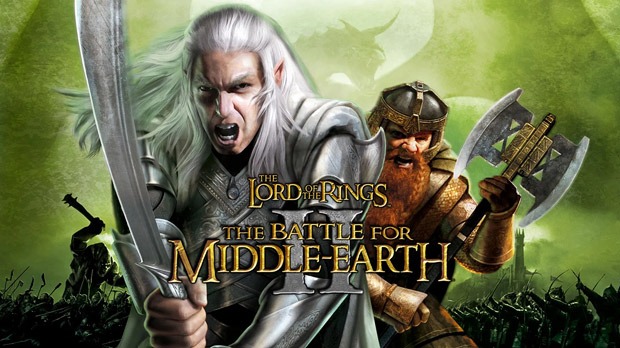
📅 Game released: 2006
The Lord of the Rings: The Battle for Middle-earth II is a fantasy real-time strategy game built around six distinct factions, flexible base construction, hero-led armies, sieges, and the War of the Ring campaign map. This PC guide explains its official download status and legitimate retail ownership, installation on modern Windows, the Rise of the Witch-king expansion, original system requirements, widescreen fixes, multiplayer, and community mods.
 By Editor Zero — independently researched, edited, and maintained.
Last updated: 15 November 2026
Last reviewed: 15 November 2026
Table of Contents
- Quick Facts
- Official PC Stores, Download & Installation
- The Lord of the Rings: The Battle for Middle-earth II Review
- Pros & Cons
- PC System Requirements
- Frequently Asked Questions
- Similar Games
The Lord of the Rings: The Battle for Middle-earth II Quick Facts
- Game: The Lord of the Rings: The Battle for Middle-earth II / Collector’s Edition
- Developer: EA Los Angeles
- Publisher: Electronic Arts
- Genre: Real-Time Strategy, Fantasy, Multiplayer
- Release: March 2, 2006 (Windows PC); July 5, 2006 (Xbox 360, North America)
- Platforms: Windows PC, Xbox 360
- Expansion: The Rise of the Witch-king (Windows PC); requires the base game and adds Angmar, a separate campaign, units, and expanded strategic and hero content
- Modes: Single-player campaigns, skirmish and War of the Ring; competitive and cooperative team skirmishes through network multiplayer
- Official online services: EA’s original PC matchmaking service is shut down; LAN and unofficial community-operated alternatives are distinct from EA support
- Engine: SAGE (Strategy Action Game Engine)
- Community: Battle for Middle-earth on Reddit, GameReplays BFME2, BFME2 on ModDB
- PC modding: Unofficial maps, balance updates, graphics, interface changes, and total conversions; some major projects require Rise of the Witch-king
- Metacritic score: 84/100 (Windows PC)
- IGN score: 9/10 (original game, PC)
- GameSpot score: 8.3/10 (original game, PC)
Official PC Store Status, Download & Installation
👇 Use these notes to check official Windows PC availability and install a legitimately owned copy of The Lord of the Rings: The Battle for Middle-earth II without relying on unofficial game downloads.
- Official PC availability: Electronic Arts no longer sells the original Windows version through a verified current PC storefront. There is no confirmed Steam, GOG, Epic Games Store, or EA app purchase/download listing for this game.
- Legitimate ownership: Use an original retail disc and its valid product key, if you own them. When considering a second-hand copy, check that the discs, key, edition, language/region, and any required documentation are included; a used key or incomplete set may create problems.
- Retail editions: The standard PC game and historical Collector’s Edition are physical-era products. The Collector’s Edition includes bonus materials rather than a modern downloadable Deluxe or Complete package.
- Rise of the Witch-king: The Windows expansion is separate from the base game and requires it. An Xbox 360 copy of the base game is not a substitute for the Windows installation needed by the PC expansion.
- Install your owned copy: Insert your original CD/DVD media, run its installer using appropriate Windows permissions, follow the disc prompts, and enter the key supplied with your copy. The original PC release is a native Windows title; emulation is not required.
- Original EA update: For the base game, the preserved official EA 1.06 patch, archived by The 3rd Age, is the final official update. Match the patch to your game language and make a backup before adding any other community files; the expansion uses a separate update path.
- Windows 10/11 limitation: Modern Windows does not support some of the original disc-era SafeDisc protections, so even authentic installations may fail to launch or may show copy-protection-related failures. Avoid untrusted modified executables, unauthorized game files, or advice to disable Windows security protections; compatibility is not guaranteed.
- Local and internet multiplayer: The former EA PC online servers are closed, but the original game includes LAN play. Unofficial replacement services, such as T3A:Online, are community-operated, not official EA multiplayer; check the service’s own requirements, game versions, and supported modifications.
- Modded installations: Keep a clean backup and check which base-game or expansion version each patch or total conversion expects. Do not assume the base game’s unofficial 1.09 patch, expansion-oriented 2.02 setups, and large content mods can be combined freely.

The Lord of the Rings: The Battle for Middle-earth II Review
Free-form bases and distinctive armies bring Middle-earth to life, though control rarely matches the spectacle.

The Lord of the Rings: The Battle for Middle-earth II is most convincing when the setting changes how a battle unfolds, rather than simply decorating it. The sequel retains the first game’s approachable economy, battalion-based armies, heroes, and dramatic powers, but replaces fixed building plots with open construction. Resource structures spread into contested territory, production can move toward the front, and a fortress becomes the centre of a larger military position rather than the whole base.
That freedom gives this fantasy RTS a faster, more adventurous rhythm than its relatively simple resource model suggests. Six factions approach familiar unit counters differently, while heroes and spellbook powers can turn a routine infantry encounter into a cavalry rout or an Ent-led siege. The tension is that the game’s ambition outpaces its precision. Campaign objectives repeat, computer opponents rely on pressure, and enormous battles can be harder to control than to admire. For players who enjoy experimenting with armies and fighting over territory, those compromises may be worth making.
Free-Form Bases Make Territory Matter
Removing the first game’s fixed construction plots is the sequel’s defining change. Builders can place barracks, economy structures, towers, and other buildings wherever the terrain permits. Resource buildings earn more when given room, so a tightly packed base may be safe but economically weak. Expanding farms, Mallorn Trees, Mine Shafts, Furnaces, or Slaughter Houses into open ground improves income while extending the area that needs defending.
That makes map control more interesting than simply accumulating money. A player who expands carelessly can lose several income buildings to cavalry or fast infantry and suddenly struggle to replace an army. An attacker, meanwhile, may accomplish more by destroying exposed production and resource structures than by charging an upgraded fortress. The balance between income and security is visible on the map, not buried in an elaborate technology tree.
Faction tools complicate that choice. Dwarven Mine Shafts offset slow movement, and Goblin Tunnels let cheap troops emerge nearer an exposed front. Yet building anywhere does not mean defending anywhere is equally comfortable. Some maps offer broad approaches with few natural chokepoints, and some factions lack the conventional walls that make a carefully enclosed base possible. Static defences also fall quickly to dedicated siege weapons and late-game powers. The most satisfying layouts support movement and reinforcement; players who prefer spending half a match perfecting an impregnable castle may find the game unusually impatient.
Six Factions Turn Familiar Counters Into Different Problems

Combat starts from readable counters, but each faction handles them in its own way. Men of the West field versatile infantry, archers, cavalry, siege units, and numerous heroes. Elves can dominate a firing line but pay heavily for lost specialists. Dwarves withstand punishment and strike hard, although their slow infantry makes good positioning and a functioning mine network essential.
Goblins favour swarms, tunnels, Spider Riders, trolls, and monsters that create openings through numbers or surprise. Mordor’s expendable Orcs can occupy ground before more dangerous units arrive, while Isengard’s Uruk-hai reward disciplined formations and upgrades. Scouting therefore matters: recognizing an opponent’s preferred opening early is often more valuable than following a familiar production sequence regardless of the matchup.
A cavalry charge can scatter swordsmen and archers, then collapse when it encounters pikemen. Catapults, Ents, and giants punish fortified positions, forcing defenders to decide whether to protect their walls or attack the siege line. Yet choosing the right counter is only part of the work. Battalion formations can be awkward, with front-rank soldiers sometimes doing most of the fighting while those behind contribute little. An army that looks evenly matched on paper may not use all its strength efficiently without careful orders. The game encourages thoughtful composition, but its unit behaviour does not always reward that thought cleanly.
Heroes and Powers Make Battles Memorable and Messy
Aragorn, Gandalf, Elrond, Gloin, Shelob, the Nazgûl, and other named heroes give armies personality, though none should be treated as invulnerable. Leadership can strengthen nearby battalions, while a hero sent alone into concentrated fire or a hard counter may fall surprisingly quickly. One subtle strategic distinction is that a defeated hero can be revived without losing earned levels, whereas an entirely destroyed veteran battalion loses its experience for good. Protecting experienced ordinary troops can be the wiser long-term investment.
Some heroes reward more attention than simply activating their strongest ability. Glorfindel, for example, can use his speed on horseback to reach a vulnerable position, then dismount to attack structures more effectively. Blade of Purity makes that commitment especially threatening under the original game’s balance rules. The interesting decision is when to exchange mobility for damage, and whether the target merits exposing a valuable hero inside an enemy base.
Create-A-Hero offers another layer of experimentation through selectable classes, appearance, attributes, and powers. It is not an elaborate character creator, but a sturdy support hero with leadership abilities can change how a group of archers performs. Strong combinations can also disturb the normal relationship between cost and battlefield impact. Spellbook summons, buffs, area attacks, and powerful late-game units intensify that unpredictability. They make battles unmistakably Tolkien-inspired, but when heroes, monsters, cavalry, and siege fire converge, it is sometimes difficult to tell what actually decided the fight.
The Campaigns Shine as Set Pieces More Than Mission Design

The Good and Evil campaigns explore the northern war instead of replaying the Fellowship’s journey. Mirkwood, Erebor, Dol Guldur, and Rivendell receive attention that a more literal adaptation of the films might never have allowed. Familiar characters still appear, but Elven, Dwarven, Goblin, and Mordor armies carry much of the story. It is a strong use of the license because the locations influence both the atmosphere and the kinds of forces assembled against each other.
The defence of Erebor turns walls, ranged troops, chokepoints, and successive Mordor assaults into the central challenge. Dol Guldur demands a more deliberate siege: tightly placed towers punish reckless advances, while Ents can dismantle fortifications from a distance. Rivendell provides a different spectacle as Goblin forces overcome layered Elven defences, heroes, and Eagles. These missions remain memorable because the scenery, enemy roster, and tactical demands belong together, not because their basic objectives are particularly inventive.
There are occasional exceptions. At Fornost, an Evil campaign bonus objective uses Untamed Allegiance to claim neutral Spider Lairs, showing that spellbook powers can alter control of the map rather than merely boost damage or summon help. Such moments also reveal how much more varied the campaign could have been. Too often, progress returns to establishing an economy, surviving waves, and destroying a defended position.
The sequel also gives up some of the first game’s sense of a continuous military journey. Its relatively self-contained missions do not recreate the same attachment to a veteran army carried through successive campaign territories. Losing those persistent troops once made later victories feel connected to earlier decisions. Here, memorable locations do more to sustain the campaign than the player’s developing relationship with individual formations.
Aggressive AI Keeps Matches Moving but Limits Their Variety
The computer usually creates urgency through early attacks and repeated waves. That keeps exposed resource buildings relevant and discourages passive play, but it rarely feels like facing an opponent with a distinct strategic personality. Higher difficulty can mean heavier pressure without necessarily producing more inventive decisions. Once the opening assault becomes predictable, a match may feel more like managing a recurring problem than responding to a changing plan.
There can also be a frustrating gap between what an attack looks like and what the AI intends. In some encounters, enemy units can run past a defending force to reach an economic target. That is particularly troublesome for Dwarves: slow infantry stationed near a Mine Shaft may be unable to catch raiders that have already passed them. It rewards anticipation and interception, but can make direct defensive orders feel unreliable. The behaviour is not universal, and a human opponent’s pressure remains far less predictable.
Naval combat suffers from a different limitation. Ships lend certain maps variety, but their tactical choices rarely approach the depth of land warfare. The fleet feels like an addition to the spectacle rather than another fully developed reason to rethink a strategy.
War of the Ring Gives Battles a Larger Purpose
War of the Ring adds the continuity that individual campaign missions often lack. Armies and heroes move across a strategic map, territories offer advantages, and encounters can be fought in real time or resolved automatically. It is not a deep grand-strategy simulation, but winning or losing a battle can open a route, threaten a valuable region, or leave an experienced army weakened before the next confrontation.
Its army-management rules are less free-form than the map initially suggests. Heroes who begin as independent army leaders can host formations, while other recruited heroes may need to join an established army rather than command a new one. Position and army-capacity restrictions further affect when forces can merge. These constraints make advance planning matter, although the interface could explain them more clearly. A battlefield victory means less if the troops needed for the next move cannot be organized as expected.
Choosing to fight a close battle manually can protect valuable units or improve a hero, while auto-resolving an obvious victory keeps the campaign moving. The victory conditions also change the experience: capturing a decisive capital may end a war quickly, whereas eliminating every opponent encourages a slower territorial contest. The Rise of the Witch-king expands the broader game with Angmar, new units, an additional campaign, and more War of the Ring and Create-A-Hero content. Angmar adds another distinct strategic identity, not merely more pieces for existing factions.
Presentation Understands the Appeal of Middle-earth Warfare
The game’s visual and sound design makes each side recognisable before any unit statistics appear. Elven archers, Dwarven machinery, Goblin monsters, Mordor’s Orc masses, and Men of the West cavalry look and sound like armies with different histories. Infantry shout as they advance, mounted units send soldiers flying, and towering creatures turn ordinary skirmishes into scenes that belong in this particular fantasy world.
But spectacle becomes a control problem when the field is crowded. The camera can feel too close, mixed battalions are not always easy to select, and troops bunch up around narrow approaches or dense fortifications. What looks like a coordinated charge from above may become a sequence of small pathfinding struggles under direct control. It is telling that the game can be most impressive to watch at exactly the moment it becomes least comfortable to command.
Final Verdict

The Lord of the Rings: The Battle for Middle-earth II succeeds by making territorial expansion, faction identity, and hero-led battles reinforce one another. Free-form construction gives the sequel more room for experimentation than the original game’s fixed plots, while six distinct armies make familiar counters worth reconsidering. The strongest moments involve a plan that works for a specific faction, on a particular map, and then changes dramatically when an enemy hero or spellbook power intervenes.
The limits are equally clear. Its campaigns offer impressive settings but uneven variety and less military continuity than the first game; aggressive AI can be repetitive; unit control struggles under pressure; and naval combat rarely justifies much attention. Those who want meticulous base fortification, intricate economic systems, or consistently sophisticated opponents may find a better fit elsewhere. For players who enjoy aggressive expansion, tactical counters, sieges, and Middle-earth armies with unmistakable character, this remains a particularly engaging RTS. War of the Ring and the expansion broaden its possibilities, but the six original factions supply its lasting appeal.
The Lord of the Rings: The Battle for Middle-earth II Pros & Cons
- Pro: Six asymmetric factions, free-form base construction, hero units, siege warfare, powers, naval combat, and varied army compositions create a flexible RTS sandbox
- Pro: Good and Evil campaigns expand beyond the movie trilogy into northern Middle-earth locations, characters, and conflicts drawn from Tolkien’s wider setting
- Pro: War of the Ring gives skirmish battles a larger strategic purpose, while Create-A-Hero adds unusually deep personalization for a real-time strategy game
- Pro: The Rise of the Witch-king and a long-running community mod scene substantially extend the amount of strategy content available to legitimate owners
- Pro: Very modest original hardware requirements make raw PC performance easy to satisfy on modern systems
- Con: The game is delisted, with no normal official digital storefront for new PC buyers
- Con: EA’s original online multiplayer service is permanently shut down, so internet play now depends on unofficial community solutions
- Con: Legacy Windows assumptions and disc-era DRM can make a legitimate installation more troublesome on Windows 10/11 than its low system requirements suggest
- Con: Many major community patches and total conversions are version-specific, and some require the separate Rise of the Witch-king expansion
The Lord of the Rings: The Battle for Middle-earth II PC System Requirements
ORIGINAL WINDOWS PC REQUIREMENTS (2006):
MINIMUM:
OS: Windows XP
CPU: 1.6 GHz equivalent processor or faster
RAM: 256 MB; 512 MB for original online matches with three or more players
GPU: 64 MB NVIDIA GeForce 3-class or ATI Radeon 8500-class graphics; Intel GMA 900 and GMA 950 were also listed as supported, while GeForce 4 MX was not supported
DirectX: DirectX 9.0c or later
Storage: Approximately 5.5–6 GB available space
Optical Drive: 16x CD-ROM or compatible DVD-ROM depending on the retail edition
Sound Card: DirectX-compatible sound hardware with speakers or headphones
Network: The original specification listed dial-up connectivity for two-player internet matches and broadband for three or more players; EA’s official online service is no longer available
RECOMMENDED / ORIGINAL ULTRA-HIGH GUIDANCE:
OS: Windows XP
CPU: Approximately 3.0 GHz Intel-class processor
RAM: 1 GB
GPU: NVIDIA GeForce 6600, GeForce 6800 Ultra, or GeForce 7800 GT/GTX-class graphics hardware
DirectX: DirectX 9.0c
Storage: Approximately 5.5–6 GB available space
Additional PC Performance and Setup Notes
- Original requirements versus modern PCs: The specifications above describe the 2006 Windows release, not a guarantee of Windows 10/11 support. CPU, RAM, and GPU power are usually less of a concern than legacy installation and disc-protection compatibility.
- Game fails to launch: Check that the original installation is intact and that the user configuration folder under
%APPDATA%\My Battle for Middle-earth(tm) II Filesexists and contains a validOptions.ini. If it is missing or damaged, see the PCGamingWiki game-specific configuration notes and preserve a backup before editing any existing file. - Widescreen resolution: The retail game does not natively present a corrected widescreen interface. For an owned Windows installation, open
%APPDATA%\My Battle for Middle-earth(tm) II Files\Options.iniin a text editor and set the existing resolution entry to your display dimensions, for exampleResolution = 1920 1080. Save the file and launch the game. This changes resolution but does not itself correct stretched HUD graphics or the narrower effective vertical view. - Fix the widescreen HUD: For the original game’s battle interface, the creator-hosted BfMe II / RotWk Widescreen UI Mod (alpha) is a downloadable community option. Read its limitations and install the BFME2-specific
.bigmodification as a mod or in the appropriate installation folder as directed on that page; back up files first. It improves the in-battle interface but does not fully repair the main menu, Create-A-Hero, War of the Ring map, or every popup. - Fix widescreen map framing: The author-hosted BFME2 1.06 Widescreen Patch provides adjusted map/camera framing for original-version 1.06 installations. Follow its page’s file placement instructions, back up any existing map file before replacement, and use only the package for the correct game and version. Changing map files can interfere with other mods or some multiplayer setups.
- Expansion and patch differences: Rise of the Witch-king has its own configuration folder, updates, and mod requirements. The base game’s 1.09 community patch is not interchangeable with the official 1.06 installation required for many expansion setups. Verify version compatibility before switching between them.
- Frame rate: Original gameplay runs around a 30 FPS simulation cap, and raising it artificially can affect game speed. Do not assume the game will behave like a modern unlocked-frame-rate RTS.
- Files and saves: Back up the original game folder, user configuration, custom maps, and saved games before installing unofficial patches, UI/map replacements, or total conversions.
Official Trailer
Note: This archived EA trailer shows the large-scale Middle-earth battles, heroes, monsters, factions, siege warfare, fortresses, and fantasy spectacle that defined Battle for Middle-earth II, while the written guide adds its present delisted status, Windows compatibility, expansion, multiplayer, system requirements, and mod guidance.
Frequently Asked Questions
Can you still legally buy The Battle for Middle-earth II on PC?
There is no verified current official digital PC purchase/download listing for the original game. Existing legitimate owners can still use their original copies where compatible, while complete second-hand retail copies occasionally appear, so check that the required original media and product key are included before buying.
Can Battle for Middle-earth II run on Windows 10 and Windows 11?
It can run on some modern Windows systems, but the original PC release was designed for Windows XP and is not a plug-and-play modern application. Missing configuration files, old Windows-version assumptions, legacy disc protection, permissions, and other compatibility issues can prevent an otherwise powerful PC from launching the game normally.
Why does Battle for Middle-earth II crash immediately when I start it?
A documented cause is a missing or incorrectly generated Options.ini file in the game’s AppData configuration folder. Check that a legitimate installation has created its configuration directory correctly and that the display settings stored there are valid before assuming the hardware itself is incompatible.
Why do all my units and buildings suddenly die a few minutes into a match?
Copy-protection or activation checks can trigger an automatic defeat on some older installations, including reports involving legitimate copies. If this happens with an owned retail copy, start with a clean installation and verify the original media, product key, permissions, and installation data rather than using unknown modified executables or DRM-bypass files.
Does Battle for Middle-earth II support widescreen or 4K resolutions?
Custom widescreen and high resolutions can be set through the game’s configuration, but the interface was designed for older aspect ratios and may stretch or scale imperfectly. The creator-hosted community UI and map fixes linked in the PC setup notes address different parts of the widescreen problem; neither is an official EA update.
Can Battle for Middle-earth II run at 60 FPS or higher?
The original PC game is designed around a 30 FPS cap, with simulation speed tied to frame rate. Forcing substantially higher frame rates through unofficial changes can therefore alter game speed or other behavior rather than simply making animation smoother.
Which Battle for Middle-earth II faction is easiest for beginners?
There is no universally best beginner faction, but Men of the West are a comfortable starting point because they combine conventional infantry, archers, cavalry, siege weapons, strong heroes, and familiar defensive options. Dwarves favor tougher but slower forces, while Elves reward careful use of speed, range, and more fragile high-value units.
How do resources and Command Points work?
Resource structures fund your army while also helping increase the Command Point limit that determines how large that army can become. Spreading economic buildings across useful territory is therefore important for both income and military growth, although exposed resource structures also give opponents valuable harassment targets.
Can War of the Ring be played against another player?
Yes. The original design supports War of the Ring against strategic AI or another player, combining the turn-based-style territorial layer with real-time battles. Its long campaign structure makes it quite different from a quick multiplayer skirmish.
Can you play as Sauron or Galadriel?
Yes, special Ring Hero mechanics allow Sauron to appear for evil forces and Galadriel for good forces under the appropriate skirmish conditions. They are extraordinarily powerful late-game heroes rather than ordinary faction units that can simply be recruited at the start of every match.
Can you continue playing Battle for Middle-earth II without the official online servers?
Yes. The single-player campaigns, offline skirmishes against AI, Create-A-Hero content, and War of the Ring against AI do not depend on EA’s former internet matchmaking service. Modern-PC compatibility is a separate issue, so an owned copy still needs to install and launch correctly.
Does Battle for Middle-earth II have multiplayer or co-op?
The PC game supports competitive and team-based multiplayer, and players can cooperate in skirmish-style matches by joining the same side against AI opponents. The scripted Good and Evil story campaigns are single-player and do not have a native co-op campaign mode.
Does Battle for Middle-earth II support split-screen or couch co-op?
No. The PC version does not provide split-screen or same-computer couch multiplayer. Local multiplayer is network-based, so participating players use separate computers rather than sharing one screen.
Does Battle for Middle-earth II support LAN multiplayer?
Yes. LAN play is part of the original PC multiplayer feature set and does not depend on EA’s retired internet matchmaking servers. Each participating installation should use legitimate ownership credentials and compatible game versions so the machines can communicate correctly.
Does Battle for Middle-earth II support crossplay or cross-save with Xbox 360?
No. The PC and Xbox 360 releases are separate legacy versions without modern crossplay, cross-progression, or cross-save infrastructure. PC saves and created heroes should be treated as local PC data rather than something that synchronizes with the console release.
What is The Rise of the Witch-king, and do I need Battle for Middle-earth II to play it?
The Rise of the Witch-king is the PC expansion and requires the base Battle for Middle-earth II installation. It adds the Angmar faction, a campaign about the Witch-king’s rise and war against Arnor, new units for existing factions, and expanded War of the Ring and Create-A-Hero features.
What are Age of the Ring and Edain Mod?
Age of the Ring and Edain are two major community projects built around Rise of the Witch-king, greatly expanding factions, heroes, maps, mechanics, presentation, and other content in different directions. They are unofficial projects with their own installation and compatibility requirements, so do not assume that files, balance patches, or submods intended for one setup can safely be mixed with the other.
Do community patches and mods work together?
Not automatically. Battle for Middle-earth II and Rise of the Witch-king have several community patch and mod ecosystems, and major projects may require a particular base version or conflict with another modification, so choose the setup you want first and follow its installation instructions rather than stacking unrelated files.
Does Battle for Middle-earth II work on Steam Deck?
There is no official Steam release and therefore no Valve Steam Deck compatibility rating. The original Windows retail game also relies on legacy technologies that were never designed for SteamOS or Proton, so any handheld setup should be considered unofficial rather than supported Steam Deck functionality.
Still have questions? Check the Battle for Middle-earth community on Reddit or GameReplays Battle for Middle-earth II community.
Sources & References
Key historical, gameplay, availability, and PC-compatibility information in this guide was checked against:
- GameSpot — Battle for Middle-earth II — original release, platforms, developer, and PC review history.
- Metacritic — PC critic reviews — original Windows critical reception and IGN score.
- PCGamingWiki — The Battle for Middle-earth II — historical PC specifications, modern configuration, compatibility, and community patch distinctions.
- Widescreen Gaming Forum — BFME II — original widescreen limitations, configuration behavior, and stretched interface.
- The 3rd Age — Widescreen UI Mod — creator instructions, downloads, and the alpha project’s known interface limitations.
- T3A:Online FAQ — unofficial multiplayer service, version requirements, and distinction from EA’s former online network.
Similar Games Like The Lord of the Rings: The Battle for Middle-earth II
- The Lord of the Rings: The Battle for Middle-earth
- Black & White 2
- Mount & Blade II: Bannerlord
- Black & White
- The Lord of the Rings: Conquest
- The Lord of the Rings: The Third Age
Found something worth playing through DecideGame?
DecideGame.com is an independent gaming project run by Editor Zero. If this guide helped you discover a game, solve a problem, or find useful information, you can support DecideGame.com and help keep new and updated game guides coming.
DecideGame — PC Game Guides, Reviews & Setup Help