
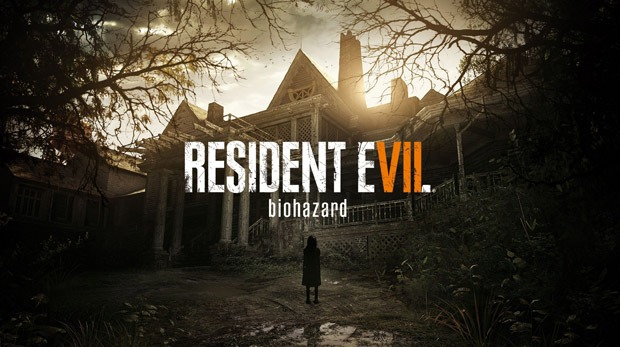
📅 Game released: 2017
Resident Evil 7: Biohazard follows Ethan Winters into the Baker family’s decaying Louisiana estate, where first-person horror revolves around locked rooms, scarce supplies, puzzles, and dangerous pursuers. This PC guide compares official Steam and Xbox download and installation options, explains Gold Edition DLC and Game Pass access, and covers system requirements, Steam Deck, VR, and practical setup.
 By Editor Zero — independently researched, edited, and maintained.
Last updated: 10 November 2026
Last reviewed: 10 November 2026
Table of Contents
- Quick Facts
- Official PC Stores, Download & Installation
- Resident Evil 7: Biohazard Review
- Pros & Cons
- PC System Requirements
- Frequently Asked Questions
- Similar Games
Resident Evil 7: Biohazard Quick Facts
- Game: Resident Evil 7: Biohazard / Gold Edition
- Developer: Capcom
- Publisher: Capcom
- Genre: Survival Horror, Horror, First Person Shooter (FPS)
- Release: January 24, 2017 (Windows PC, PS4 and Xbox One)
- Platforms: Windows PC, macOS, PS4, PS5, Xbox One, Xbox Series X|S, Nintendo Switch (cloud version), Nintendo Switch 2, iPhone, iPad
- DLC: Banned Footage Vol. 1 and 2, End of Zoe, and Not a Hero; Gold Edition includes the first three, while Not a Hero is available to base-game owners at no additional charge
- Cloud Access: Xbox Cloud Gaming through eligible Game Pass access or supported owned-game streaming; conditions vary by plan and region
- Steam Deck: Verified by Valve
- VR: Official full VR on PlayStation VR; no official native PC VR mode
- Engine: RE Engine
- Modes: Single-player; no campaign co-op or competitive multiplayer
- Community: Resident Evil subreddit, Steam Discussions
- PC modding: Unofficial Nexus Mods projects and community VR, model, visual, and FOV tools; check compatibility and back up saves
- Metacritic score: 83/100 (original Windows PC release)
- IGN score: 7.7/10 (original multiplatform release)
- OpenCritic average: 86/100 (original multiplatform release)
- PC Gamer score: 90/100 (PC)
- Steam user reception: Overwhelmingly Positive overall across all languages; Very Positive among English-language reviews
Official PC Stores, Download & Installation
👇 Use the official PC stores below to purchase, download, and install Resident Evil 7, or check your eligible Game Pass library before buying.
- Steam: The base game provides Ethan’s complete campaign. Steam also offers a Gold Edition bundle for players who want the principal story DLC.
- Gold Edition: The Steam and Microsoft/Xbox Gold packages contain the base game, Banned Footage Vol. 1, Banned Footage Vol. 2, and End of Zoe. Not a Hero is available to all base-game owners at no additional charge.
- Duplicate DLC warning: Gold Edition contains the Season Pass content. Check existing Deluxe Edition, Season Pass, or individual DLC ownership before buying another package.
- Microsoft/Xbox Play Anywhere: The compatible Microsoft digital edition provides Xbox console and Windows PC entitlement under the same Microsoft account. A Steam purchase does not grant Xbox/Microsoft Store ownership.
- Game Pass: Microsoft lists the base game for eligible Game Pass tiers, including PC access. Subscription libraries and regional entitlements can change; the base-game listing does not automatically grant paid Gold Edition DLC or the Season Pass.
- Cloud play: Xbox also lists cloud-streaming options with plan or game-ownership conditions. Check the current entitlement for your region rather than assuming a PC purchase includes unrestricted cloud access.
- Extra PC-store caveat: Microsoft notes that its Windows Store build does not support integrated/on-board GPUs or the Xbox Series X|S-specific upgraded features; check hardware and version before choosing this edition.
- Steam features: Valve lists achievements, Steam Cloud, HDR, trading cards, Family Sharing, and full controller support. The Steam Deck compatibility rating is Verified.
- VR and mods: The Windows edition lacks the official full PlayStation VR mode. PC VR, FOV, ultrawide, and other community modifications are unofficial; back up saves and match each tool to your installed build.
- Installation and activation: Install through Steam or the Xbox app, sign in to the owning account, allow the initial online activation, and leave additional disk space beyond the listed 24 GB for downloads and updates. Thereafter, ordinary single-player play can generally work offline.
 Buy Resident Evil 7: Biohazard on Steam
Buy Resident Evil 7 Gold Edition on Steam
 Buy Resident Evil 7: Biohazard Gold Edition on Microsoft / Xbox Store

Resident Evil 7: Biohazard Review
A decaying Louisiana house makes survival horror frighteningly personal again.
Resident Evil 7: Biohazard feels like Capcom dragged the series back into a dark room and locked the door. After years of escalating action and ever larger outbreaks, the stakes become smaller and much harder to escape. One house. One missing wife. One family that should not be alive in the condition they are in.
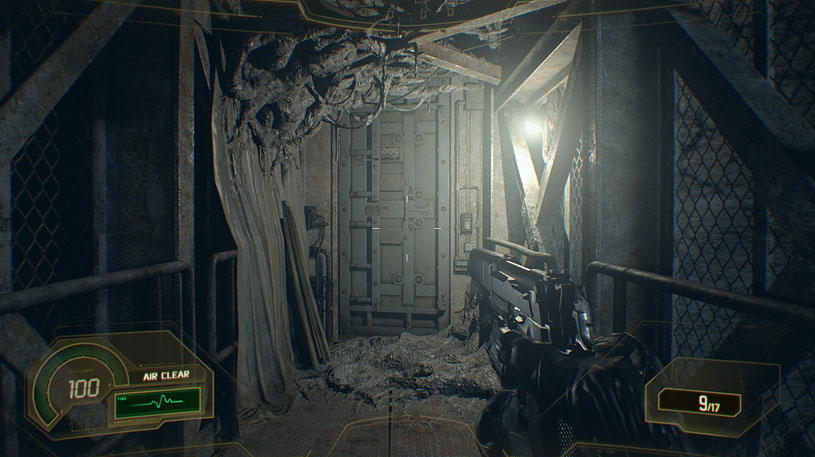
Ethan Winters arrives in rural Louisiana searching for Mia, his missing wife, and finds himself trapped on the Baker estate. The place is full of rotting food, locked doors, unexplained noises, and inhabitants who seem almost impossible to kill. Unlike the soldiers and trained operatives who often carry the series, Ethan is an ordinary man with little apparent preparation for what follows.
That smaller perspective is the game’s greatest strength. For much of the campaign, the objective is not to stop a global catastrophe but simply to get out alive. Each newly opened door promises progress while raising another uncomfortable question: what might be waiting on the other side?
Story & Tone
The story draws on southern gothic horror, body horror, and the unease of finding something deeply wrong inside an apparently ordinary home. Jack, Marguerite, and Lucas Baker have distinct personalities rather than functioning as interchangeable bosses. They feel like people who once belonged to a family, which makes their violence more disturbing than the appearance of another anonymous monster.
Jack makes the strongest introduction. The grotesque dinner scene is shocking enough, but his later pursuit through the main house changes the way the story is experienced. He interrupts ordinary exploration, forcing Ethan to abandon a search, retreat from a hallway, or rethink a route. Marguerite makes the Old House repulsive through insects and cramped spaces, while Lucas turns the fear toward traps, games, and deliberate cruelty. The encounters are varied not because every Baker has a complicated combat system, but because each changes what feels safe.
This intimacy separates RE7 from a faster, more explosive entry such as Resident Evil 3 Remake. Both can deliver spectacular danger, but the Baker house builds tension from proximity and familiarity. The same corridor becomes more unsettling after the player has been chased through it once.
There are limitations. Ethan’s restrained reactions can feel oddly detached from the abuse he suffers, and the later explanations move toward more conventional Resident Evil science fiction. Even the carefully staged opening has a trade-off: its vulnerability establishes the horror, but delays the point when Ethan can carry weapons and investigate the house freely. Players who enjoy the eventual exploration loop may find those scripted early minutes less compelling on a repeat run.
First-Person Perspective Changes Everything
The shift to first-person removes the comforting distance that a third-person camera can provide. A floorboard creaks somewhere ahead, a shape stands in the corner, and Ethan cannot see what is behind him without turning around. This makes ordinary actions unusually tense. Opening a bathroom door or descending a narrow staircase demands attention that would seem excessive in almost any other setting.
The camera also subtly changes the player’s pace. Instead of charging into a room, it becomes natural to look through an opening, listen, and check the nearest escape route. Resident Evil 7 teaches caution through sound and uncertainty rather than constantly placing an enemy in view. Its best scares often begin before anything attacks.
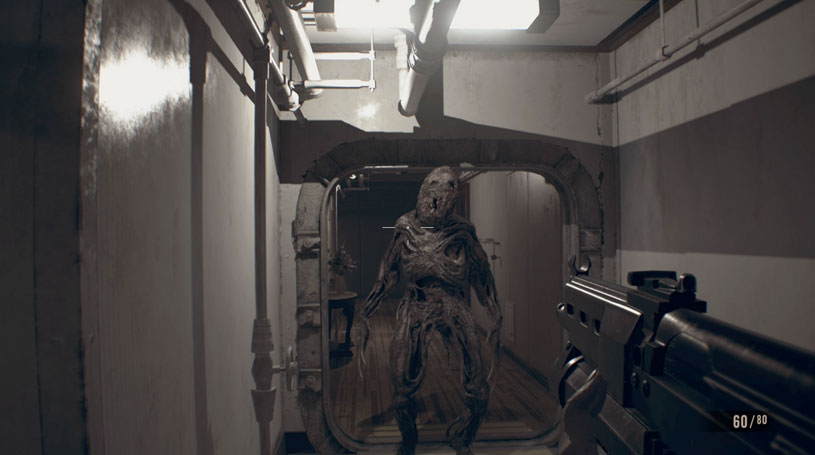
That closeness carries into combat. A Molded advancing down a tight corridor does not give Ethan much room to recover from a missed headshot. Reloading too late or hesitating over a healing item can make an otherwise manageable enemy feel overwhelming. The first-person view is effective not because it makes the shooting mechanically complex, but because it makes the consequences of poor timing difficult to ignore.
Gameplay: Survival, Resource Management, and Fear
Beneath the new perspective sits a recognizably classic survival-horror loop: search rooms, collect keys, solve puzzles, manage a limited inventory, and decide which enemies are worth fighting. Chem fluid is particularly important because it can contribute to healing supplies or ammunition. Using it to recover from one mistake may leave fewer options for the next encounter.
There is an interesting difference between feeling short of supplies and actually running out. Early encounters make every bullet seem precious, yet careful players on Standard difficulty can accumulate large reserves by the later chapters, especially when they favor a reliable handgun and shotgun instead of using every available weapon. The pressure is therefore partly psychological. Inventory space, uncertain enemy placement, and not knowing what comes next can make a full ammunition box feel less reassuring than it should.
The Molded lack the recognizable personalities of the zombies in RE1, and their relatively limited variety becomes noticeable over time. They remain effective threats because of their durability, sudden movements, and ability to punish a rushed shot. Blocking and retreating often matter as much as aiming. Against ordinary Molded, learning which room doors can interrupt pursuit can even be more useful than killing another enemy. The faster four-legged variants complicate that calculation, because putting distance between Ethan and the creature is less dependable.
Weapon choice has more nuance than a simple progression toward higher damage. The repaired M21 shotgun holds only two shells, compared with the M37’s larger capacity, but its tighter spread makes shots at moderate distance more purposeful. One favors fewer, more deliberate opportunities; the other is more forgiving when several threats close in. In a game where reloading and proximity carry genuine risk, that difference can influence how an encounter is approached.
Boss fights give those survival decisions a theatrical setting. The garage confrontation with Jack turns a confined space into a desperate scramble where the environment matters as much as the weapon in Ethan’s hands. Marguerite’s encounter uses vertical space, blind spots, and grotesque movement to make it difficult to feel in control. These fights can be messy, but that lack of elegance suits a protagonist who is surviving by improvisation.
Level Design & Exploration
The Baker estate works because it is compact enough to learn but complicated enough to remain threatening. The main house, Old House, yard, and testing area form a progression of locked passages, hidden routes, and puzzle items. A door that seemed irrelevant earlier becomes the next important objective, while an unlocked shortcut can transform a difficult journey into a manageable one. The satisfaction comes from understanding a place that initially feels hostile and confusing.
There is a useful parallel with Metro 2033 Redux. Both use first-person movement, darkness, sound, and uncertain supplies to make travel uncomfortable. Metro is more explicitly a shooter, though, while RE7 lets the architecture itself do more of the work. Discovering a safe passage through the house can feel as valuable as finding another box of shells.
Shadow puzzles and strange household mechanisms are usually straightforward, but their placement matters. They force Ethan to inspect rooms closely and revisit them with new information. Backtracking rarely feels like empty padding when the player is still learning the estate, because familiar rooms carry memories of previous threats. A corridor may be physically unchanged yet feel completely different when approached with little health and an unfinished objective.
This spatial knowledge also reveals an interesting weakness in the horror. Once the behavior of regular enemies and the boundaries of their pursuit are understood, some encounters become avoidable rather than frightening. That is not entirely a flaw. Turning an unfamiliar house into a place the player can navigate intelligently is one of the series’ oldest pleasures. The tension gradually shifts from helplessness toward cautious competence.
Progression follows the same pattern. Ethan does not gain character levels or a skill tree. His advantages come from better weapons, inventory upgrades, key items, and the player’s growing understanding of the layout. The game becomes easier to read without becoming completely comfortable, at least until its more linear later sections move away from the estate’s strongest exploration design.
Atmosphere & Horror Design
The house is disgusting in a strangely convincing way. Mold spreads across surfaces, food decays on the dinner table, insects gather in walls, and piles of rubbish suggest that someone still lives among the ruin. It feels abandoned and occupied at the same time. That contradiction gives the Baker estate more personality than a series of dark corridors filled with monsters.
Sound is just as important as what is visible. Footsteps, buzzing flies, shifting doors, distant impacts, and creaking wood can make an empty room feel dangerous. Often nothing happens immediately, which gives the player time to imagine a threat. The lighting contributes by revealing enough to encourage movement but rarely enough to remove doubt about the next corner.
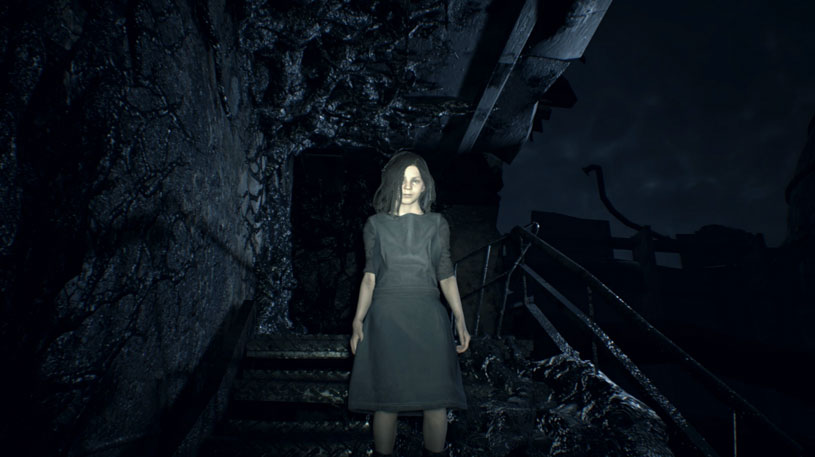
The rhythm is deliberately uneven in a productive way. A save room offers quiet, music, and a moment to sort through supplies; the next hallway puts those reassuring routines back into doubt. Not every scene needs a jump scare. The game is more convincing when the possibility of danger changes how an ordinary space is approached.
Its weaker stretches show the importance of that balance. As the campaign moves away from the house’s interconnected rooms, the action becomes more direct and some of the mystery disappears. The horror is still visually unpleasant, but fewer meaningful choices about routes and exploration can make those sections feel less involved.
Replayability & Longevity
Resident Evil 7 is a focused campaign, yet familiarity gives repeat runs a different purpose. Once the surprises, item locations, and puzzle solutions are known, the challenge becomes planning a cleaner route, wasting fewer resources, and deciding when a confrontation is unnecessary. That shift from uncertainty to efficiency is satisfying, although scripted sequences lose some impact when their outcome is already familiar.
Madhouse difficulty reshapes this relationship more substantially than a basic increase in enemy damage. Different placements and the cassette-tape saving system make each stretch of progress feel more consequential. The tapes need not be so scarce that every save must be hoarded; the real decision is whether a difficult detour is worth risking without recording progress first.
Unlockable equipment adds another trade-off. The circular saw can spare valuable ammunition against isolated Molded, but its close range exposes Ethan to attacks that a firearm could avoid, and it is a poor answer to the Old House’s swarming insects. It changes the resource equation without making good positioning irrelevant. That is a more interesting replay reward than simply handing the player a weapon that solves every fight.
The extra episodes also experiment with the formula. Ethan Must Die turns survival into a test of learning hazards and using traps against pursuing enemies rather than trying to shoot through every encounter. End of Zoe takes a different approach with close-range fighting; a fast four-legged Molded becomes especially intimidating when it must be met with punches instead of carefully aimed gunfire. These modes are uneven as extensions of the main story, but they show how much the rules of an encounter can change without redesigning the enemy itself.
For those interested in where Capcom takes these ideas, Resident Evil Requiem offers a useful point of comparison in the series’ continuing balance between vulnerable horror and larger bio-weapon storytelling. RE7 remains distinctive because it spends so much of its time making one building, rather than an ever-expanding threat, the center of the experience.
Final Verdict
Resident Evil 7: Biohazard finds a fresh way back to the series’ foundations without simply recreating an older game. First-person exploration makes the Baker estate intimate and hostile, and its locked rooms, carefully placed supplies, and memorable family encounters give fear a practical effect on how the player moves and makes decisions.
Its weaknesses are real. Ethan can feel emotionally distant, the Molded cannot match the Bakers for variety, and later chapters trade some of the house’s intricate exploration for more straightforward action. Resource scarcity also becomes less consistent once a careful player learns the game’s rhythms. Yet that gradual movement from fear toward competence is part of what makes the experience satisfying.
Resident Evil 7 is at its best for players who enjoy investigating dangerous spaces, making deliberate survival choices, and earning a sense of control one unlocked door at a time. Anyone looking mainly for fast combat or constant enemy variety may prefer a more action-driven entry. For those drawn to slow-building tension, the Baker estate remains one of the series’ most effective settings.
Resident Evil 7: Biohazard Pros & Cons
- Pro: Immersive first-person horror with a memorable Baker family and oppressive estate
- Pro: Strong sound design, lighting, body horror, and carefully paced tension
- Pro: Satisfying exploration built around keys, puzzles, backtracking, limited inventory, and safe rooms
- Pro: Gold Edition adds unusual survival challenges and story-focused DLC with different play styles
- Con: Ethan’s reactions can feel muted during extreme horror scenes
- Con: The recurring Molded enemies provide less variety than the Baker family encounters
- Con: Some later sections become more linear and action-oriented than the strongest early chapters
Resident Evil 7: Biohazard PC System Requirements
OFFICIAL WINDOWS PC REQUIREMENTS:
MINIMUM:
OS: Windows 10, 64-bit
CPU: Intel Core i5-4460, 2.70GHz / AMD FX-6300 or better
RAM: 8 GB
GPU: NVIDIA GeForce GTX 960 / AMD Radeon RX 460
DirectX: Version 12
Storage: 24 GB available space
Sound: DirectSound compatible, with DirectX 9.0c or later support
Target: 1080p at 30 fps; texture quality or texture streaming may need adjustment on limited-VRAM systems
Activation: Internet connection required for game activation
RECOMMENDED:
OS: Windows 10 or Windows 11, 64-bit
CPU: Intel Core i7-3770, 3.4GHz / AMD equivalent or better
RAM: 8 GB
GPU: NVIDIA GeForce GTX 1060 with 3GB VRAM
DirectX: Version 12
Storage: 24 GB available space
Sound: DirectSound compatible, with DirectX 9.0c or later support
Target: 1080p at 60 fps
Activation: Internet connection required for game activation
Additional PC Setup and Performance Notes
- The minimum and recommended rows target 1080p at 30 fps and 60 fps respectively; they are not promises for every scene or graphics configuration.
- High texture settings can exceed the VRAM available on older cards. Lower texture quality or disable texture streaming if textures fail to load correctly or performance becomes unstable.
- The recommended Steam specification includes Windows 11 alongside Windows 10. The minimum specification names Windows 10; both require a 64-bit operating system.
- Steam lists DirectX 12 for the main Windows requirements. Older DirectX 11 instructions or mod files may target a different game build, so check compatibility before using them.
- An SSD is not listed as mandatory, but it can improve loading consistency and is preferable when troubleshooting streaming-related pauses.
- For crashes, black screens, or stutter, verify files first, update the GPU driver, remove mods, disable overlays, undo unstable overclocks, and test fullscreen versus borderless mode.
- Steam lists HDR support, but ultrawide framing and field of view can vary between gameplay, menus, and cinematics. Community fixes should be backed up and matched to the current build.
- Steam Deck is Verified. If an external Bluetooth or USB controller is ignored, manually change the active controller through the Steam Deck Quick Access menu.
Official Trailer
Note: The official Gold Edition launch trailer presents the Baker estate, Ethan Winters’ campaign, and the additional story content included with the complete edition.
Frequently Asked Questions
Should I buy the Resident Evil 7 base game or Gold Edition?
The base game includes Ethan’s full campaign. Gold Edition also includes both Banned Footage volumes and End of Zoe, making it the more complete option if you want the additional story and challenge content. Check your existing Season Pass or DLC ownership before buying.
Is Resident Evil 7 included with PC Game Pass?
Microsoft lists the base game for eligible PC Game Pass access. Check the Xbox app for your plan and region; a subscription does not automatically grant the paid Gold Edition DLC or permanent ownership.
Is Not a Hero free, and how is it different from End of Zoe?
Not a Hero is a no-additional-cost epilogue starring Chris Redfield and places greater emphasis on combat. End of Zoe is a separate paid story episode included in Gold Edition and the Season Pass, featuring a different protagonist and unusual melee-focused encounters.
What is included in Banned Footage Vol. 1 and Vol. 2?
Vol. 1 contains Nightmare, Bedroom, and Ethan Must Die; Vol. 2 contains 21, Daughters, and Jack’s 55th Birthday. They mix escape puzzles, family backstory, arcade challenges, and difficult survival scenarios rather than forming a second full campaign.
In what order should I play the main story and DLC?
Finish Ethan’s campaign before Not a Hero and End of Zoe. The Banned Footage side stories and challenge modes are best explored afterward if you want to avoid interrupting the main narrative or encountering contextual spoilers.
Do I need to play earlier Resident Evil games before Resident Evil 7?
No. Ethan’s search for Mia is understandable on its own, although returning players will recognize connections to the broader series.
What should I play after Resident Evil 7?
Resident Evil Village directly continues Ethan’s story. If you especially enjoy keys, puzzles, resource management, and backtracking, Resident Evil 2 Remake is another close match.
Does Resident Evil 7 have co-op, split-screen, or multiplayer?
No. The main campaign and additional episodes are single-player; they do not offer built-in co-op, split-screen, or competitive multiplayer.
Can I play Resident Evil 7 offline, and are saves shared between Steam and Xbox?
Ordinary single-player play can generally work offline after installation and any required activation. Steam Cloud and Microsoft/Xbox cloud saves operate within their respective account ecosystems; purchasing the game on Steam does not automatically transfer saves or ownership to the Xbox app version.
Is Resident Evil 7 Steam Deck Verified?
Yes. Valve rates the Steam version Verified. Its default handheld controls are supported, although an external controller may sometimes need to be selected manually through Steam’s controller interface.
Does Resident Evil 7 support VR on PC?
There is no official native PC VR mode. Official full VR support was provided for PlayStation VR; Windows VR play depends on unofficial community tools that may require version-specific setup.
Does the PC version support ultrawide displays and wider FOV settings?
The game’s native field-of-view range is limited, and 21:9 presentation has restrictions. Community FOV and ultrawide modifications exist, but their results can differ by game build, cutscene, and interface; back up changed files before using them.
What should I try if Resident Evil 7 crashes or opens to a black screen?
First verify the installed game files, test with supported graphics drivers and default video settings, and temporarily disable overlays and unofficial mods. If the game starts but struggles on a low-VRAM GPU, reducing texture quality or texture streaming may help.
Should I use a controller or keyboard and mouse?
Both are supported. Mouse aiming offers precision when targeting Molded, while a controller may feel more natural for slower exploration and blocking. Use whichever input method makes movement and quick defensive actions comfortable.
How long does the campaign take, and which difficulty is best for beginners?
A typical first campaign takes roughly 9–12 hours depending on exploration and puzzle-solving. Casual is a gentler introduction; Normal is appropriate for players familiar with survival horror. Madhouse changes enemy, item, and save management and is better suited to a later run.
How can I conserve ammunition and healing supplies?
Search rooms carefully, block attacks when appropriate, and consider avoiding enemies that do not need to be killed. Chem fluid may be used for healing or ammunition, so spending it on one resource reduces what is available for the other.
Does Resident Evil 7 have multiple endings or New Game Plus?
A late-story decision leads to two ending variations. There is no conventional New Game Plus that carries your complete inventory forward, but completion rewards, collectibles, and Madhouse difficulty give repeat runs different goals.
Is Resident Evil 7 appropriate for children?
It is intended for mature audiences and contains graphic violence, gore, disturbing scenes, strong language, and sustained horror. Consult your region’s age rating before considering it for a younger player.
Still have questions? Check the Resident Evil community on Reddit, the Steam Discussions, or the official Resident Evil 7 website.
Sources & References
Key official, PC-specific, and review details in this guide were checked against the following sources:
- Steam — Resident Evil 7 Biohazard — Windows requirements, Steam Deck rating, platform features, and overall user reception.
- Steam — Gold Edition bundle — DLC contents, Season Pass equivalence, and duplicate-purchase guidance.
- Xbox — Resident Evil 7 — Windows PC version, Xbox Play Anywhere, Game Pass access, and Microsoft Store limitations.
- Capcom — Official platform announcement — original launch and subsequent console, Nintendo Switch 2, and Apple-platform releases.
- Metacritic — PC critic reviews — the original Windows PC version’s 83/100 score, distinct from other platform scores.
- PC Gamer — Resident Evil 7 review — scored PC review and editorial assessment.
Similar Games Like Resident Evil 7: Biohazard
- Resident Evil 8: Village
- Resident Evil 2 Remake
- Resident Evil 1 HD Remaster
- Silent Hill 2 (2001)
- Haunting Ground
- Silent Hill f





Found something worth playing through DecideGame?
DecideGame.com is an independent gaming project run by Editor Zero. If this guide helped you discover a game, solve a problem, or find useful information, you can support DecideGame.com and help keep new and updated game guides coming.
DecideGame — PC Game Guides, Reviews & Setup Help